7 Reasons Your University Doesn't Prepare You for AI Assessments (And How to Bridge the Campus-to-Career Gap in 60 Days)
- Monish Kumar

- Feb 20
- 6 min read
You spent four years earning your degree. You aced your exams. You wrote countless papers. You even landed a decent GPA.
But here's the brutal truth: none of that prepared you for the AI assessments companies are using right now to filter candidates.
While you were memorizing theories from outdated textbooks, the hiring landscape transformed completely. Recruiters aren't impressed by your transcripts anymore, they're running candidates through intelligent automation solutions that evaluate real-world problem-solving, AI fluency, and practical application skills. Skills your university never taught you.
The gap between campus and career isn't just wide, it's a canyon. And 58% of students like you feel completely unprepared for an AI-enabled workplace. But here's the good news: you can bridge that gap in 60 days. First, let's expose exactly why your institution failed you.
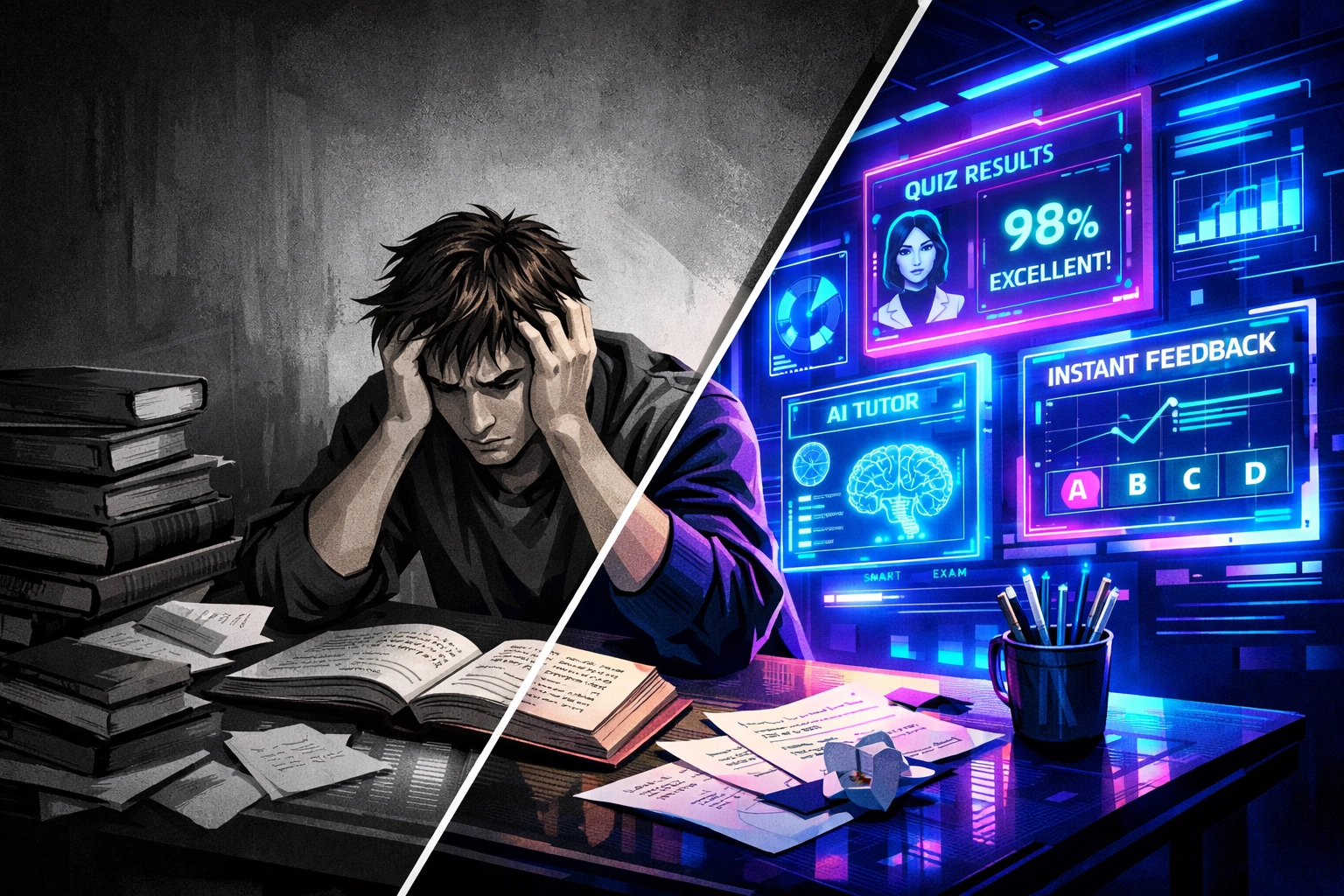
1. Your Curriculum Is Stuck in 2015 (While AI Moved to 2025)
Your professors are still teaching from curriculum frameworks designed before ChatGPT existed. Before autonomous AI agents revolutionized workflows. Before custom AI solutions became standard operating procedure in every industry.
Here's the stat that should terrify you: 62% of MBA students report that AI fluency is underrepresented in their programs. These aren't undergrads taking intro courses, these are graduate students in supposedly cutting-edge business programs. If MBAs aren't getting adequate AI training, what chance do other majors have?
Universities update curricula at a glacial pace. By the time your institution adds an AI course to the catalog, the technologies covered are already obsolete. Meanwhile, companies are deploying nlp solutions, generative AI models, and knowledge-first RAG systems that reduce hallucinations and ground responses in private data.
You're learning theory. The market demands application.
2. Your Professors Can't Teach What They Don't Understand
Let's address the elephant in the lecture hall: 40% of faculty are just beginning their AI literacy journey. Only 17% operate at advanced or expert levels.
Think about that. The majority of your instructors are struggling with the same AI fundamentals you need to master, except they're supposed to be teaching you. They're wrestling with prompt engineering basics while employers expect you to understand multi-step workflows powered by autonomous agents.
This isn't a criticism of educators, it's a structural failure. Universities don't invest in professional development for AI literacy. They don't provide resources for faculty to gain hands-on experience with enterprise AI tools. They expect professors to magically become AI experts while managing full course loads and research obligations.
The result? Faculty who emphasize avoiding AI rather than mastering it. Who warn about academic dishonesty instead of teaching ethical implementation. Who can't prepare you for AI assessments because they've never taken one themselves.
3. Policy Paralysis Creates a Culture of Fear Instead of Fluency
97% of schools lack clear policies on AI use. Read that again.
Your institution has no idea how to handle AI in education. So what do they do? They ban it. They restrict it. They create a climate where using AI feels like cheating rather than like developing essential career skills.
This policy vacuum doesn't protect academic integrity, it sabotages your future. While you're prohibited from using AI tools in assignments, your future competitors are at companies mastering prompt engineering, testing custom LLMs for brand-voice consistency, and building AI-powered workflows that 10x their productivity.
Universities treat AI as a threat to traditional assessment models instead of recognizing that those models are already obsolete. They're protecting an outdated system rather than preparing you for the reality you'll face in 60 days when you're job hunting.

4. Zero Experience With Real AI Assessments
Pop quiz: Have you ever taken an AI-powered skills assessment? Have you practiced video interviews analyzed by sentiment analysis dashboards? Do you know how applicant tracking systems with nlp solutions parse your resume?
For most students, the answer is no to all three.
You're preparing for a game you've never played. Companies use sophisticated intelligent automation solutions to evaluate communication patterns, problem-solving approaches, and technical competencies. These aren't multiple-choice tests: they're dynamic assessments that adapt based on your responses, analyze your reasoning process, and measure skills universities never even taught you existed.
The first time you encounter these AI assessments shouldn't be when your dream job hangs in the balance. But universities don't provide simulation environments. They don't offer practice AI interviews. They don't expose you to the actual evaluation methods that will determine your employability.
5. Theory Without Application Creates the "So What?" Problem
Only 53% of coursework feels directly applicable to day-to-day job responsibilities. Less than half. That means nearly half of what you learned is functionally useless in real-world settings.
Universities excel at teaching you what things are. They struggle with teaching you how to use them. You can define machine learning, explain neural networks, and discuss the ethics of AI: but can you actually implement a custom AI solution for a business problem? Can you integrate an autonomous agent into an existing workflow? Can you leverage multimodal AI for image and video processing?
The "So What?" problem is simple: employers don't care if you can explain AI in theory. They care if you can deploy it in practice. They want candidates who can take their understanding and immediately apply it to automate workflows, optimize operations, and drive ROI.
Your degree gave you knowledge. It didn't give you capability.
6. Institutional Bureaucracy Kills Innovation at the Speed of Committees
Want to add a relevant AI course to your major? Great: submit a proposal to the curriculum committee. Wait six months. Navigate departmental politics. Secure budget approval. Convince administrators this isn't a passing trend.
By the time that course launches, the AI landscape has evolved three times over.
Universities can't move at the speed of AI innovation because they're fundamentally not designed to. Academic institutions prioritize stability, tradition, and thorough vetting. The AI industry prioritizes rapid iteration, experimentation, and adaptation.
This isn't just about courses: it's about infrastructure. Your university probably doesn't offer controlled environments for AI experimentation. They don't provide access to enterprise AI tools. They don't have partnerships with AI companies for real-world project experience.
While a handful of elite institutions like Duke implement platforms like ChatGPT Edu, most students are left scrambling on their own to gain the experience employers demand.

7. Assessment Methods Haven't Evolved Past the Scantron Era
Your university still evaluates you with exams, essays, and group projects. Meanwhile, companies evaluate you with AI-powered simulations, real-time problem-solving scenarios, and portfolio-based demonstrations of practical skills.
The disconnect is staggering. Universities optimize you to perform well on tests that don't exist in the professional world. They measure your ability to memorize and regurgitate rather than your ability to apply, adapt, and innovate.
Modern AI assessments don't ask you to define concepts: they ask you to solve problems. They don't want essays about automation: they want you to build automated solutions. They don't care about your GPA: they care about your Readiness Score based on demonstrable competencies.
Your institution prepared you to excel at university. It didn't prepare you to succeed at work.
The 60-Day Bridge: How to Close the Gap Before It's Too Late
Enough about what went wrong. Let's talk about how you fix it: fast.
You don't have four more years to wait for your university to catch up. You have 60 days to make yourself genuinely industry-ready. Here's your roadmap:
Weeks 1-2: Baseline Assessment
Take comprehensive AI assessment tests that measure your current skills across technical competency, communication, problem-solving, and AI fluency
Identify specific gaps between where you are and where employers need you to be
Establish your starting Readiness Score: your quantifiable measure of career preparedness
Platforms like LoudMindAI's Industry Ready offer exactly these baseline evaluations
Weeks 3-4: Intensive Skill Development
Focus on hands-on AI training and workshops, not more theory
Practice prompt engineering with real generative AI and custom LLMs
Learn to work with autonomous AI agents that handle multi-step workflows
Build familiarity with privacy-first deployment and data sovereignty concepts
Master the tools companies actually use: not academic simulations of them
Weeks 5-6: Application and Practice
Complete real-world AI projects that demonstrate practical capability
Practice AI-powered mock interviews with sentiment analysis feedback
Build solutions using workflow automation tools like Zapier, Make, or custom integrations
Work with nlp solutions and multimodal AI for diverse challenges
Document your process: employers want to see your thinking, not just your results
Weeks 7-8: Portfolio Building and Validation
Compile your projects into a portfolio that showcases measurable skills
Retake AI assessments to demonstrate concrete improvement
Quantify your growth: show how your Readiness Score increased
Prepare AI-optimized application materials that pass through intelligent automation solutions
Connect with organizations that validate your competencies, not just your credentials
This isn't about getting another certificate to hang on your wall. This is about developing demonstrable capabilities that AI assessments can actually measure: and that employers actually value.
Your Move: Don't Wait for Your University to Catch Up
Your institution won't fix this problem in time to help you. They're too slow, too constrained, and too invested in protecting outdated systems.
But you're not powerless. The tools, training, and assessments you need exist right now: outside the traditional academic structure. Companies like LoudMindAI are building exactly what universities can't: rapid, practical, validated pathways from campus to career that eliminate the barriers traditional education creates.
The campus-to-career gap isn't closing. It's widening every day as AI reshapes hiring, assessment, and workplace expectations. You can either wait for institutions to adapt: and graduate unprepared: or you can take control of your readiness today.
Sixty days. That's all the time you need to transform from a graduate with a degree into a professional with demonstrable, AI-validated competencies.
The choice is yours. Make it count.
Ready to bridge your gap? Start your Industry Readiness assessment today and discover exactly where you stand: and how to get where you need to be.
Comments