Stop Sending Graduates Into the Abyss: How AI Assessments Bridge the Campus-to-Career Gap in 60 Days (Not 6 Months)
- Monish Kumar

- Feb 21
- 5 min read
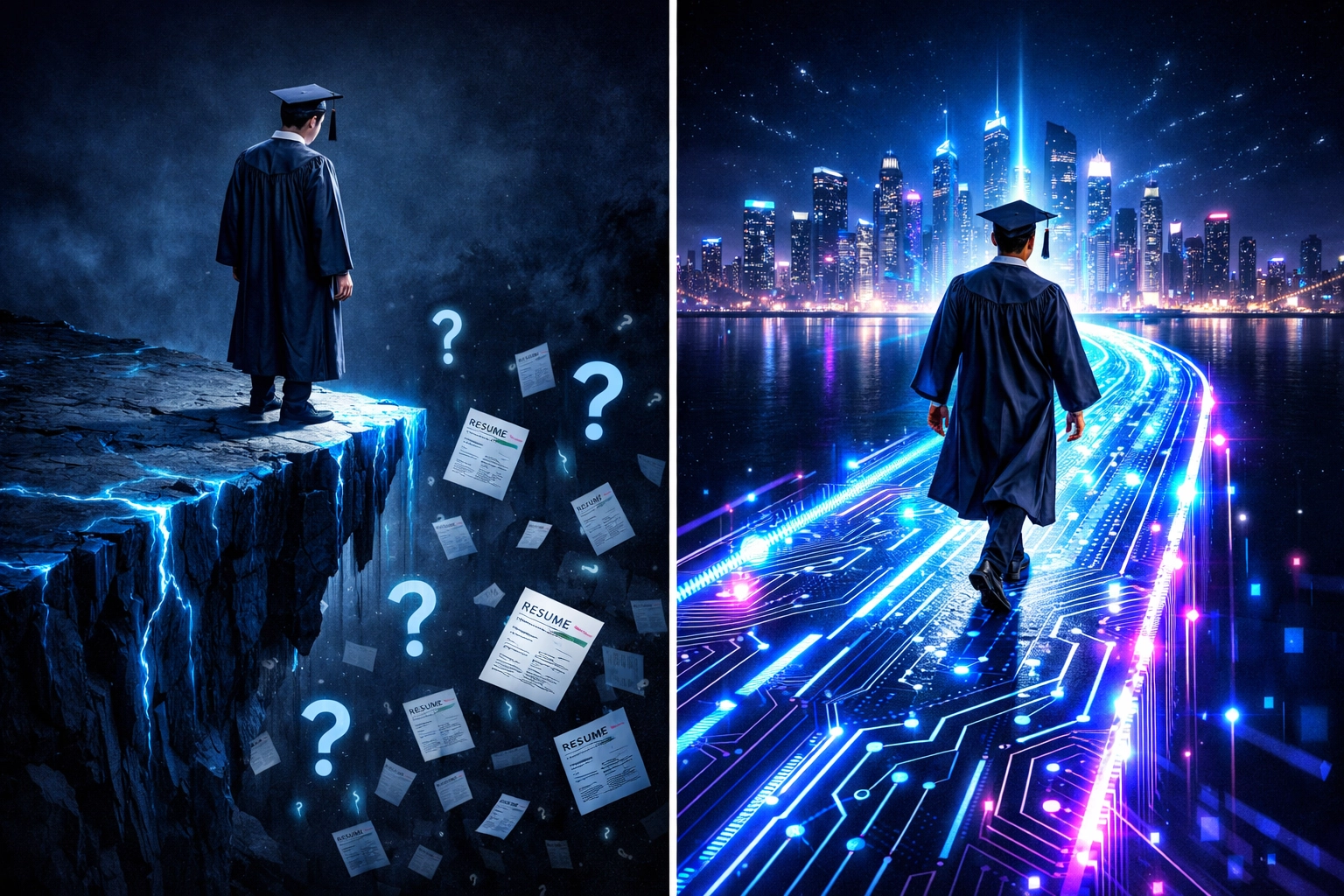
You know the drill. Graduates walk across that stage, diploma in hand, ready to conquer the world. Six months later? They're still sending out generic resumes, attending career fairs that lead nowhere, and wondering why their degree isn't opening doors.
Here's the uncomfortable truth: The traditional campus-to-career pathway is broken. And it's not because your students aren't talented: it's because they're navigating a six-month maze when they should be sprinting a 60-day track.
The gap between graduation and gainful employment shouldn't feel like launching graduates into the abyss and hoping they land somewhere decent. But that's exactly what's happening when you rely on outdated career prep methods.
AI assessments are flipping this script. Not in some distant future. Right now.
The Six-Month Struggle Nobody Talks About
Traditional career development looks something like this:
Weeks 1-8: Generic career counseling sessions where one advisor tries to guide 500 students
Weeks 9-16: Shotgun approach to job applications with standardized resume templates
Weeks 17-24: Waiting for responses, attending networking events, hoping something sticks
It's inefficient. It's impersonal. And it's costing your graduates: and your institution's reputation: dearly.
The core problem? Zero real-time feedback, zero personalization, and zero connection to what employers actually need right now. By the time a career counselor reviews a student's skills and suggests a path, the job market has already shifted. By the time graduates figure out their skill gaps, they've already been rejected from dozens of positions.
How AI Assessments Compress Six Months Into 60 Days
AI-powered assessments don't just speed things up: they fundamentally transform how students transition from campus to career. Here's how:
Immediate Feedback Eliminates the Waiting Game
Traditional assessments mean students submit work, wait days or weeks for feedback, then adjust. AI assessments provide instant, actionable insights the moment a student completes an evaluation. No waiting for teaching staff. No bureaucratic delays. Just immediate clarity on where they stand and what needs improvement.
At institutions like the University of Guelph, AI-driven simulations let students practice real workplace scenarios: handling difficult conversations, negotiating with executives, responding to discrimination: and receive instant feedback on their approach. Students can iterate and improve in hours, not weeks.
Personalized Skill Mapping Targets Real Gaps
Generic career advice is dead. AI algorithms analyze individual skills, interests, experiences, and learning patterns to create hyper-personalized career roadmaps aligned with current market demands.
Instead of telling every business student to "build leadership skills," AI assessments identify that you specifically need advanced data visualization experience for the financial analyst roles you're targeting: and point you to the exact resources to acquire it in weeks.
This precision eliminates months of wandering through irrelevant skill-building exercises. Students focus only on what matters for their specific career path.
Real-Time Labor Market Alignment Means No Wasted Effort
Here's where it gets powerful: AI platforms don't just assess students in a vacuum. They continuously analyze millions of job postings, hiring trends, and skills demand across industries. Your assessment results aren't based on what was valuable five years ago: they reflect what employers are hiring for today.
Platforms using real-time labor market intelligence can tell a computer science graduate that while they have strong Python skills, the specific roles they want require experience with Kubernetes and CI/CD pipelines: and here's exactly where to learn them. No guesswork. No trial-and-error. Just data-driven direction.
The 60-Day Blueprint That Actually Works
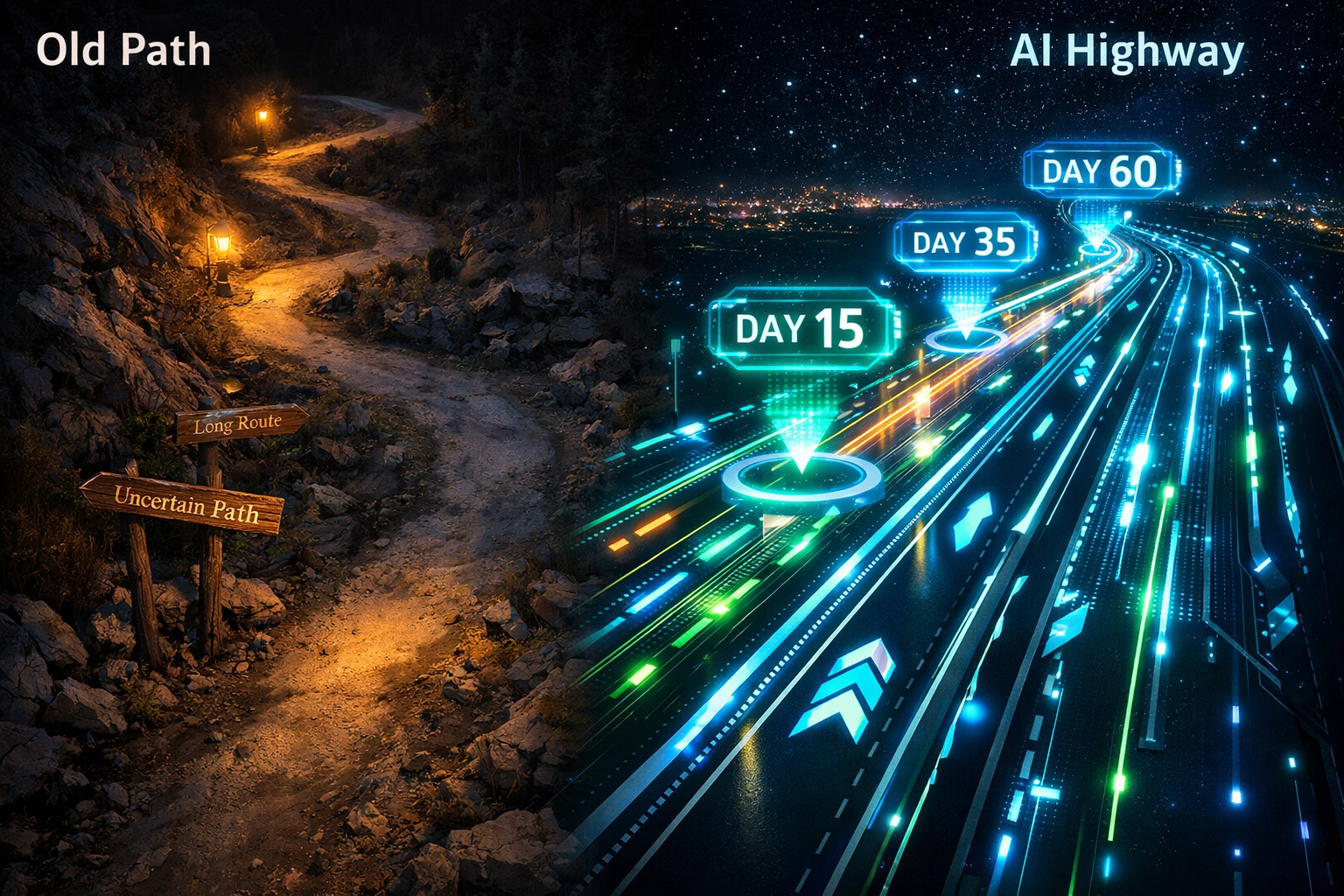
So what does this accelerated timeline actually look like in practice? Let's break it down:
Days 1-15: Comprehensive Skills Assessment
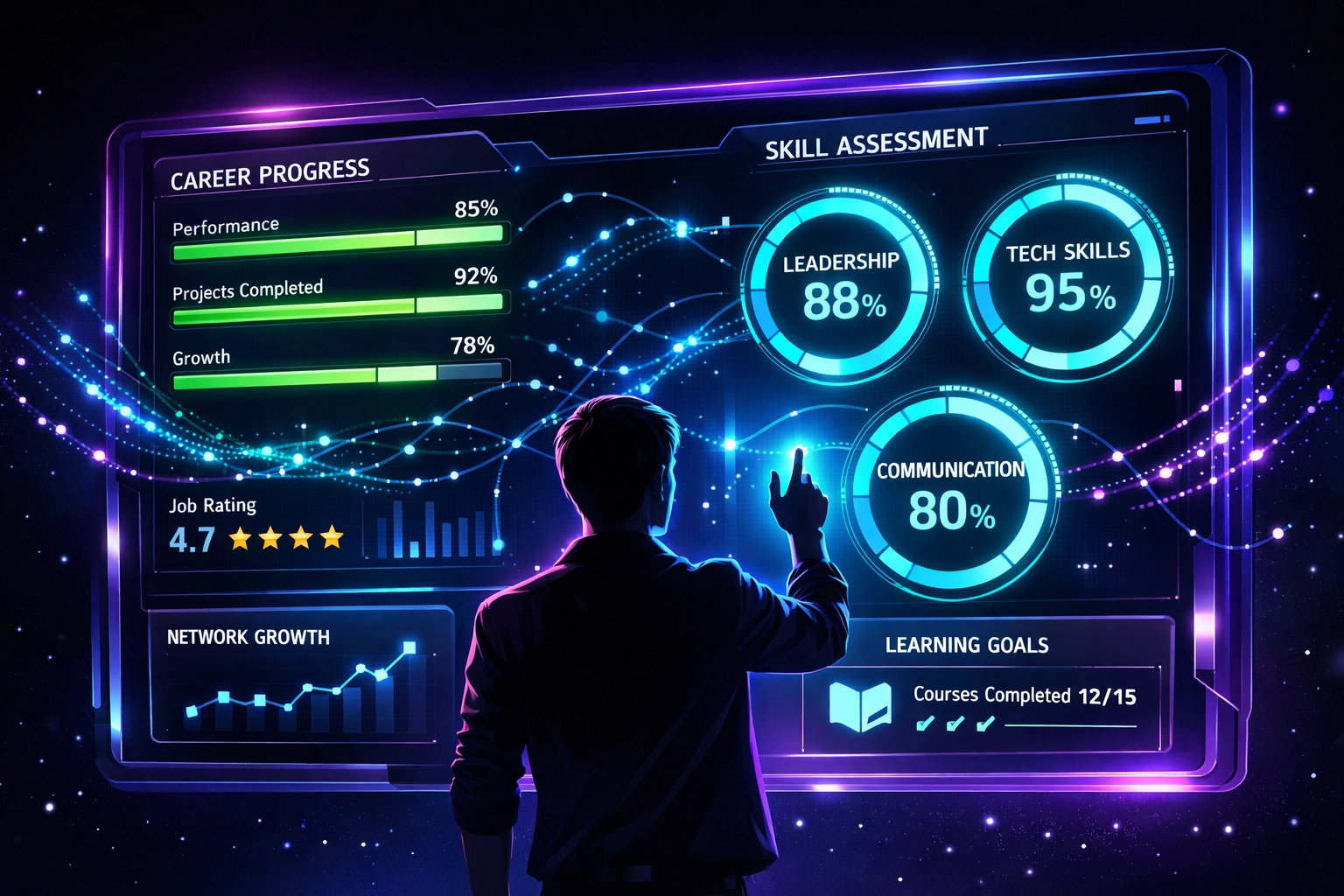
AI-powered evaluations measure technical competencies, soft skills, and workplace readiness
NLP solutions analyze communication patterns, problem-solving approaches, and critical thinking
Students receive detailed readiness scores with specific improvement areas
No more vague feedback like "work on communication": you get "your technical explanations need more context for non-technical audiences"
Days 16-35: Targeted Skill Development
Personalized learning pathways address identified gaps
AI simulations provide low-risk practice environments for challenging workplace scenarios
Students engage with AI-trained models that respond dynamically based on their choices
Practice using actual workplace tools: Slack, email, project management platforms: not theoretical textbooks
Days 36-50: Intelligent Job Matching
AI automation analyzes student profiles against thousands of open positions
Advanced matching algorithms surface opportunities aligned with skills, interests, and career goals
Automated resume optimization using NLP to match employer requirements
Students spend time applying to right-fit positions, not shotgunning 200 applications
Days 51-60: Interview Prep and Final Polish
AI-powered interview simulations tailored to specific companies and roles
Real-time feedback on responses, body language, and communication effectiveness
Final skills validation ensures students can confidently demonstrate their readiness
Students enter interviews knowing exactly how to position their capabilities
Why Traditional Methods Can't Compete
The fundamental difference? Scale, speed, and personalization. A career counselor can meet with maybe 10-15 students per day. An AI assessment platform can evaluate thousands simultaneously: and provide each student with completely personalized feedback and pathways.
Traditional job boards require manual searching and application. Intelligent automation solutions can scan, match, and recommend positions 24/7, learning from each interaction to improve recommendations.
Generic skill assessments tell you what you're good at. AI assessments powered by labor market data tell you what you're good at and whether it matters for the jobs you want right now.
This isn't about replacing human guidance: it's about augmenting it. Career counselors become strategic advisors focusing on complex situations and personal support, while AI handles the heavy lifting of assessment, skill gap analysis, and opportunity matching.
Real-World Results You Can Measure
The proof isn't theoretical. Institutions implementing AI-driven career readiness platforms are seeing:
60% reduction in time-to-hire for graduates
3-4x increase in interview conversion rates
Dramatic improvement in first-job placement rates
Higher starting salaries due to better role alignment
Students aren't just getting jobs faster: they're getting better jobs because they're entering the market with validated skills, clear positioning, and data-backed confidence.
The Campus-to-Career Gap Is Solvable: If You Act
Here's the reality: The gap between graduation and career success isn't widening because students lack potential. It's widening because the tools and processes designed to bridge that gap are stuck in a pre-digital era.
AI assessments aren't a nice-to-have innovation anymore. They're the difference between your graduates spending six months in uncertainty and 60 days on a clear, accelerated path to career success.
The institutions and companies embracing custom AI solutions for career readiness aren't experimenting: they're gaining a massive competitive advantage. Students actively choose programs that demonstrate measurable career outcomes. Employers partner with institutions that produce genuinely work-ready graduates.

What This Means For You
If you're a university administrator, career services director, or placement coordinator, the question isn't whether to adopt AI-powered assessments. It's whether you can afford not to.
Your graduates deserve better than the abyss. They deserve a clear, data-driven, accelerated path from campus to career. And the technology to deliver it exists right now.
Want to see how AI assessments can transform your campus-to-career outcomes? Explore industry-ready solutions that are already helping institutions compress that six-month struggle into a 60-day success story.
The gap isn't unbridgeable. You just need better tools to cross it.
And those tools are already here: powered by AI, driven by data, and ready to launch your graduates toward careers, not into the abyss.
Stop waiting six months for what should take 60 days. Your next cohort of graduates is counting on you to build that bridge: and AI assessments are the foundation that makes it possible.
Comments