Stop Graduating Unemployable Students: 5 AI Assessment Secrets That Actually Bridge the Campus-to-Career Gap
- Monish Kumar

- Feb 15
- 5 min read
Here's the brutal truth nobody wants to say out loud: Your institution is graduating unemployable students.
Not because they're lazy. Not because they're unintelligent. But because the campus-to-career gap has turned into a canyon: and traditional assessments are doing absolutely nothing to fix it.
While universities celebrate graduation rates, employers are quietly watching 90% of fresh graduates fail technical screenings. Entry-level positions are vanishing. AI automation is reshaping entire industries overnight. And your students? They're walking into interviews with degrees that prove nothing about their actual readiness.
The system is broken. But there's a solution: and it's already working for the institutions smart enough to implement it.
The Assessment Crisis Nobody's Talking About
Here's what's happening right now: 69% of undergraduates expect their institutions to equip them with AI skills. Meanwhile, hiring managers are rejecting candidates with 4.0 GPAs because they can't demonstrate real-world problem-solving using modern tools.
Traditional assessments measure memorization. Employers need proof of application. That gap? It's costing your graduates job offers: and it's costing your institution its reputation.
The old model of "learn theory, get internship, land job" is dead. AI has compressed the career ladder. Junior positions that used to exist for skill-building are being automated away. Students now need to operate at higher rungs immediately after graduation: and most institutions haven't even acknowledged this shift.
Secret #1: Scaffold AI Literacy From Day One (Not Senior Year)
Stop treating AI as an elective topic or a final-semester add-on. AI proficiency needs to be woven into your curriculum from Year 1 through graduation.
This isn't about teaching students to code. It's about building employer-ready portfolios and artifacts as they achieve learning milestones. Students should be using intelligent automation solutions to solve real problems in their first semester: not hearing about AI for the first time in a capstone course.
Here's how forward-thinking institutions are doing it:
Year 1: AI literacy fundamentals and basic tool proficiency
Year 2-3: AI-supported skill artifacts within their major (industry analysis, data visualization, strategic planning using AI tools)
Year 4: Portfolio completion that demonstrates advanced application across multiple domains
The payoff? A general business administration major with the right AI portfolio can now qualify for data warehousing analyst roles: positions that previously required technical degrees. That's the power of sequenced, strategic AI integration.
Secret #2: Make Students Build Tangible AI-Powered Artifacts
Theory doesn't get interviews. Artifacts do.
Your students need concrete, demonstrable proof they can apply AI tools to real business problems. Not hypothetical case studies. Not multiple-choice exams. Real deliverables that employers can evaluate during the hiring process.
Smart assessments now require students to produce:
AI-assisted market research reports with data visualization
Automated workflow solutions using custom ai solutions
Professional communication materials (résumés, pitch decks, strategic briefs) enhanced with AI
Industry-specific problem-solving artifacts that showcase both technical tool use and critical judgment

When assessment shifts from "what do you know?" to "what can you produce?", student readiness skyrockets. Employers can see capability instead of guessing based on GPA.
And here's the kicker: these artifacts become living proof of competency that students carry into interviews, demonstrating exactly the kind of hands-on experience hiring managers are desperate to find.
Secret #3: Test What AI Can't Replace (Human Judgment and Ethical Reasoning)
Here's where most institutions get it backwards. They're still assessing memorizable facts: exactly what AI does better than humans.
The real assessment opportunity? Measure the higher-order skills that AI automation cannot replicate: critical thinking, ethical judgment, problem interpretation, and strategic decision-making.
Your AI assessments should force students to:
Verify and critique AI-generated insights (not blindly accept them)
Navigate ethical dilemmas in AI application
Explain reasoning behind AI-assisted decisions
Identify when AI tools produce unreliable or biased outputs
Apply human judgment to interpret data patterns
This dual focus prepares students to use AI productively while recognizing its limitations. Employers don't want graduates who can only prompt ChatGPT. They want professionals who can harness nlp solutions strategically and know when human expertise is irreplaceable.
The institutions winning the employability game are the ones teaching students to be AI-augmented experts, not AI-dependent workers.
Secret #4: Personalize Assessments Using AI Itself
Traditional one-size-fits-all testing fails students with different learning speeds and styles. It also fails to identify skill gaps until it's too late.
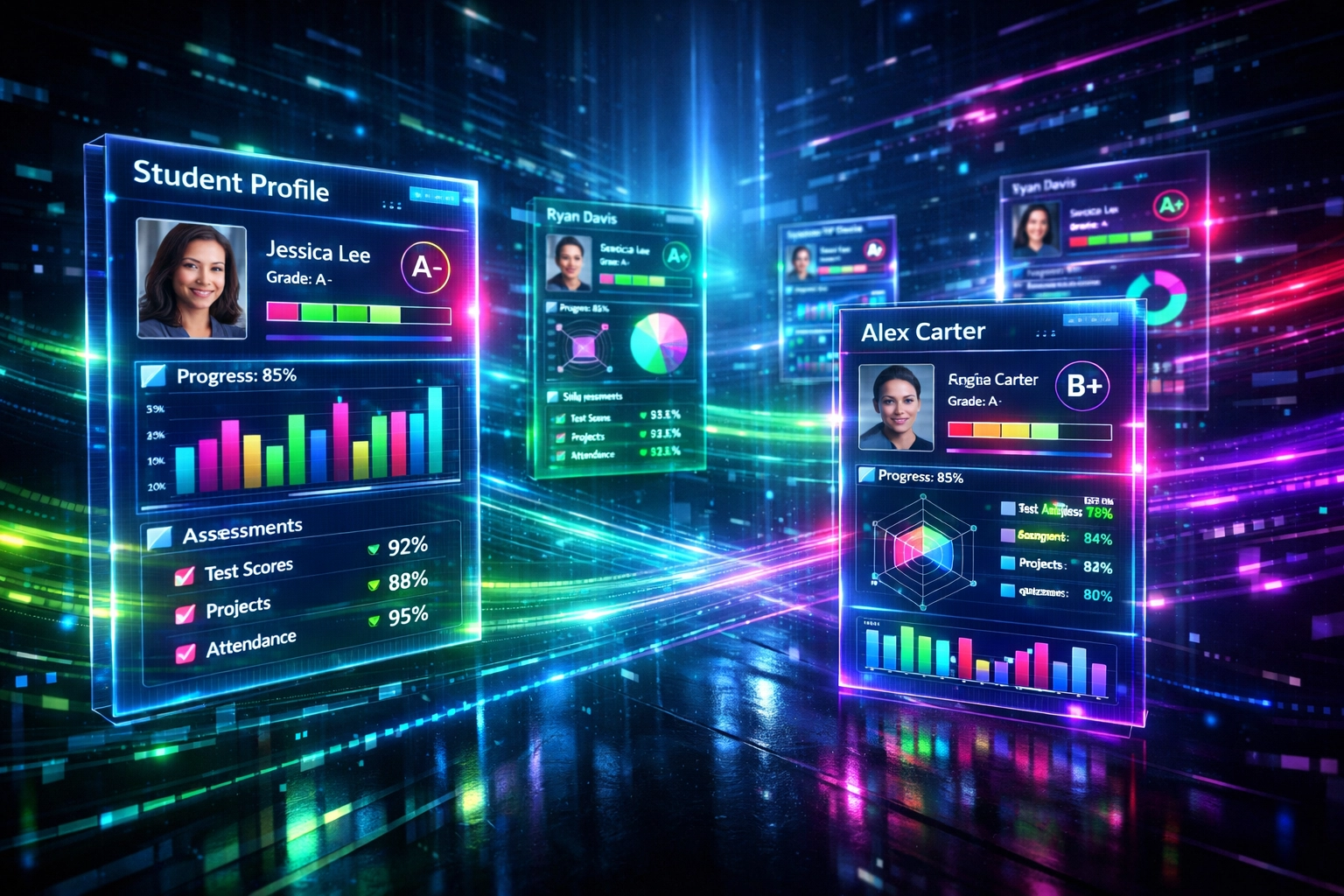
Use AI to make your assessments adaptive and personalized. Machine learning algorithms can identify patterns in student performance, flag learners who need targeted support, and tailor instruction to diverse needs: all while streamlining grading for efficiency and objectivity.
Here's what AI-powered assessment systems enable:
Real-time feedback loops that help students course-correct immediately
Personalized learning pathways based on individual progress
Predictive analytics that identify at-risk students before they fail
Scalable one-on-one coaching through intelligent automation solutions
When students receive personalized, continuous feedback about their readiness, they build genuine confidence: not false confidence based on curved grades. They know exactly where they stand relative to employer expectations.
This is where platforms like Industry Ready AI are changing the game. Instead of hoping students are prepared, institutions can provide Readiness Scores: quantifiable proof that graduates have mastered employer-demanded skills before entering the job market.
Secret #5: Align Every Assessment With Actual Employer Skill Demands
Your faculty might understand academic theory. But do they understand how AI has reshaped hiring patterns in different industries this year?
Assessment alignment requires ongoing employer partnership: not curriculum committees making decisions in isolation.
Forward-thinking institutions are now:
Conducting quarterly employer advisory panels to identify emerging skill demands
Reverse-engineering job descriptions from top employers to create relevant assessment criteria
Building AI assessment frameworks around actual hiring decisions (not academic tradition)
Creating industry-specific competency tracks that mirror real career progressions
The critical shift? Assessments must evaluate students' ability to operate at higher career ladder rungs immediately after graduation. Because those entry-level "learn on the job" positions? AI automation eliminated most of them.
Students who can demonstrate domain expertise acquisition through AI tools, conduct sophisticated industry analysis, and deliver strategic insights using intelligent automation solutions are the ones landing competitive offers. Your assessments need to prove they can do exactly that.
The Real Campus-to-Career Bridge
Here's what separates institutions producing employable graduates from those churning out unemployable degree-holders:
They've redefined assessment entirely.
Instead of testing memorization, they're measuring application. Instead of standardized exams, they're requiring demonstrable artifacts. Instead of generic coursework, they're building employer-aligned competencies using custom ai solutions and real-world tools.
The campus-to-career gap isn't an abstract problem. It's a solvable challenge: but only if you're willing to abandon outdated assessment models that no longer serve students or employers.
Your graduates deserve better than degrees that don't translate to job offers. Employers deserve better than having to train from scratch because universities refused to evolve. And your institution deserves the reputation that comes from producing genuinely career-ready talent.
Stop Graduating Unemployable Students. Start Today.
The five assessment secrets above aren't theoretical. They're being implemented right now by institutions that understand the stakes.
The question is: Will your institution lead this transformation: or watch from the sidelines as competitors steal your students and your reputation?
If you're ready to bridge the campus-to-career gap with AI-powered assessments that actually prepare students for modern hiring realities, LoudMindAI can help. We specialize in custom ai solutions that turn traditional education into employability engines: with measurable results.
Because your students didn't earn their degrees to be unemployable. And you didn't build your institution to produce graduates nobody wants to hire.
It's time to fix the system. Starting with how you assess.
Comments