Your Career Fair Is a Waste: Why 90% of Students Fail Industry Readiness (And the 3-Step AI Assessment That Fixes It)
- Monish Kumar

- Feb 19
- 4 min read
Let's be honest: your career fair isn't the problem. The polished booths, the recruiters, the free swag: all fine. The problem is what students bring to those booths.
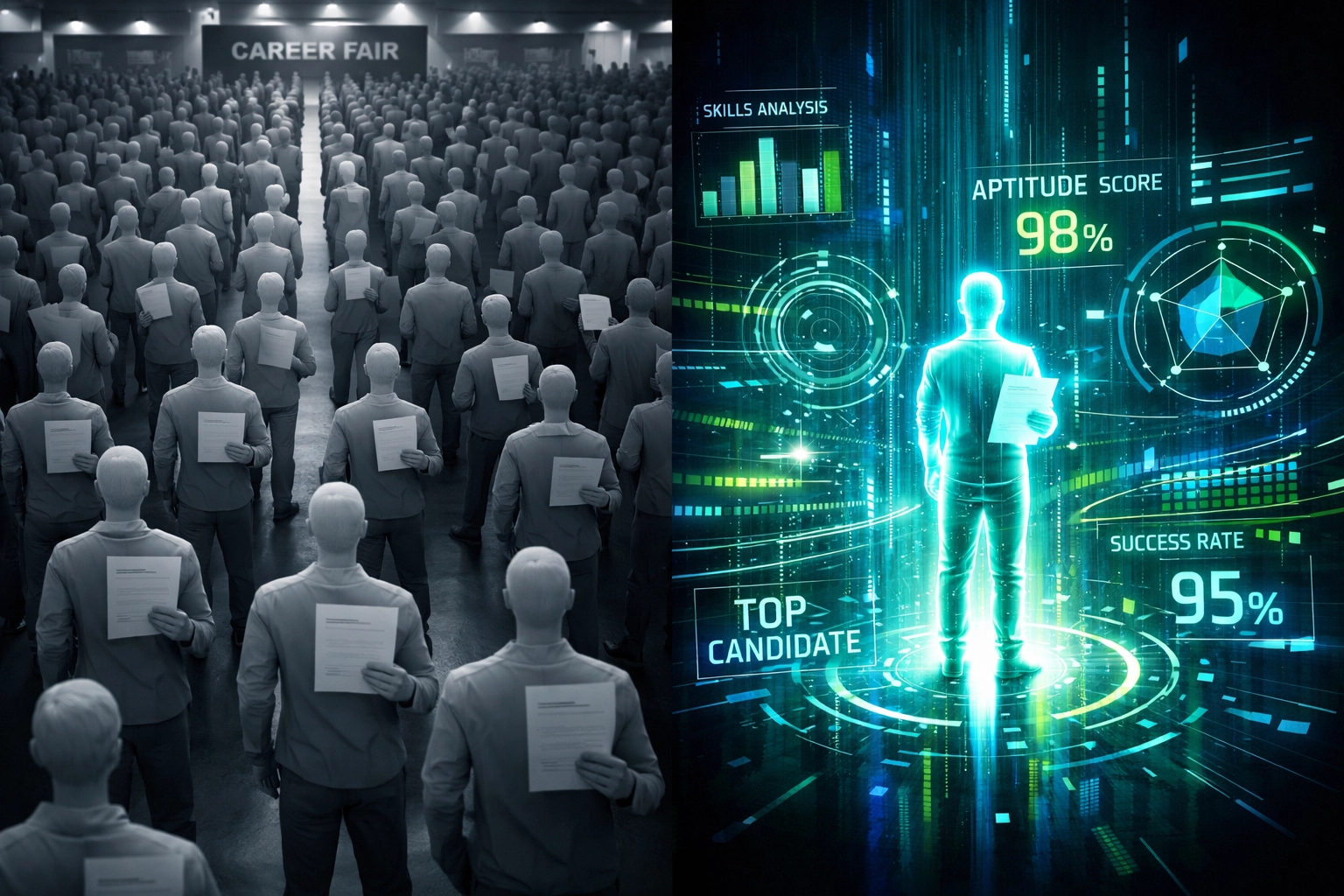
A generic resume. A handshake. Maybe a LinkedIn URL. Zero proof they can handle day one.
And recruiters? They're drowning in sameness. Every candidate claims they're "detail-oriented" and a "team player." Every resume lists the same coursework. Every interview sounds like a rehearsed script.
Here's the brutal truth: One-third of hiring managers say recent graduates lack work ethic. One in four say they're underprepared for interviews. And 84% of surveyed hiring managers agree most students entering the workforce simply aren't ready.
Career fairs convert: sure. About 24% of attendees land offers. But that means 76% walk away empty-handed, not because they're unqualified, but because they can't prove they're ready.
So here's the fix: a 3-step AI assessment framework that measures what matters, not what sounds good on paper.
The Real Problem: Students Show Up With No Proof
You know what separates a hired candidate from a rejected one? It's not the GPA. It's not even the extracurriculars.
It's demonstrable readiness.
Employers don't want to train you from zero. They want someone who can walk in, understand the workflow, and contribute by week two. But how do you prove that when all you've got is theory?
Traditional education teaches concepts. It doesn't simulate pressure. It doesn't replicate tight deadlines, cross-functional collaboration, or real-world problem-solving under constraints. And career fairs? They're speed-dating: not deep dives into capability.
The gap isn't just about skills. It's about validation. Students need a way to objectively measure and showcase their industry readiness. Without it, they're just another face in the crowd.
Why Traditional Career Prep Fails (And Always Will)
Here's what doesn't work:
Mock interviews : They're scripted. Real interviews aren't.
Generic resume workshops : Everyone leaves with the same template.
Theoretical projects : Neat on paper, zero relevance to actual workflows.
Career counselor advice : Often outdated, rarely industry-specific.
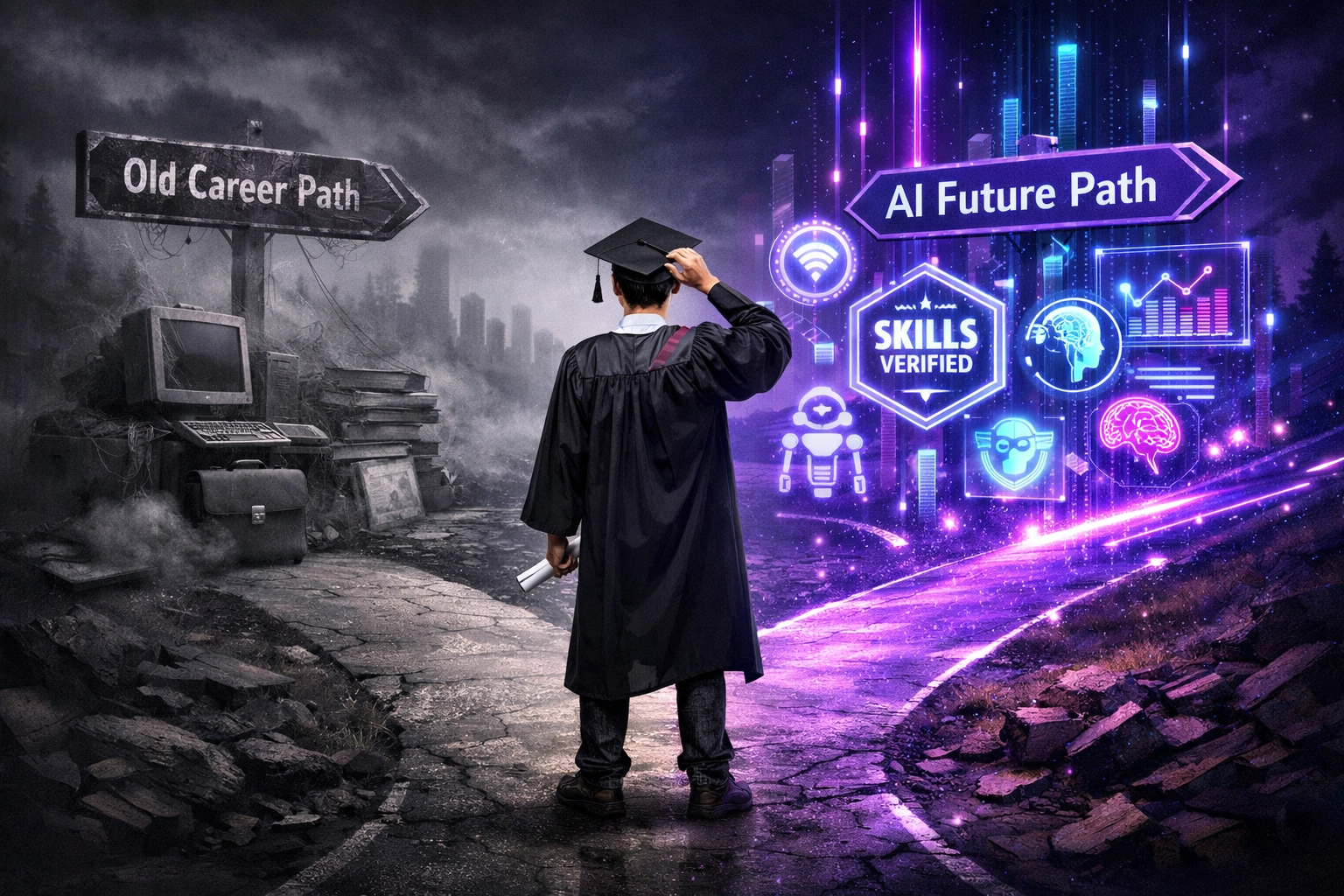
None of these methods give you a readiness score. None provide personalized, AI-driven feedback that adapts to your strengths and weaknesses. And none simulate the chaos of real work environments.
You're practicing in a vacuum. And when you hit the career fair, it shows.
The 3-Step AI Assessment Framework That Actually Works
Here's how you fix it. Three steps. One outcome: proof you're ready.
Step 1: Real-World Simulation (Not Theory)
Forget textbook problems. You need to be thrown into industry-specific scenarios that mirror actual job responsibilities.
Think:
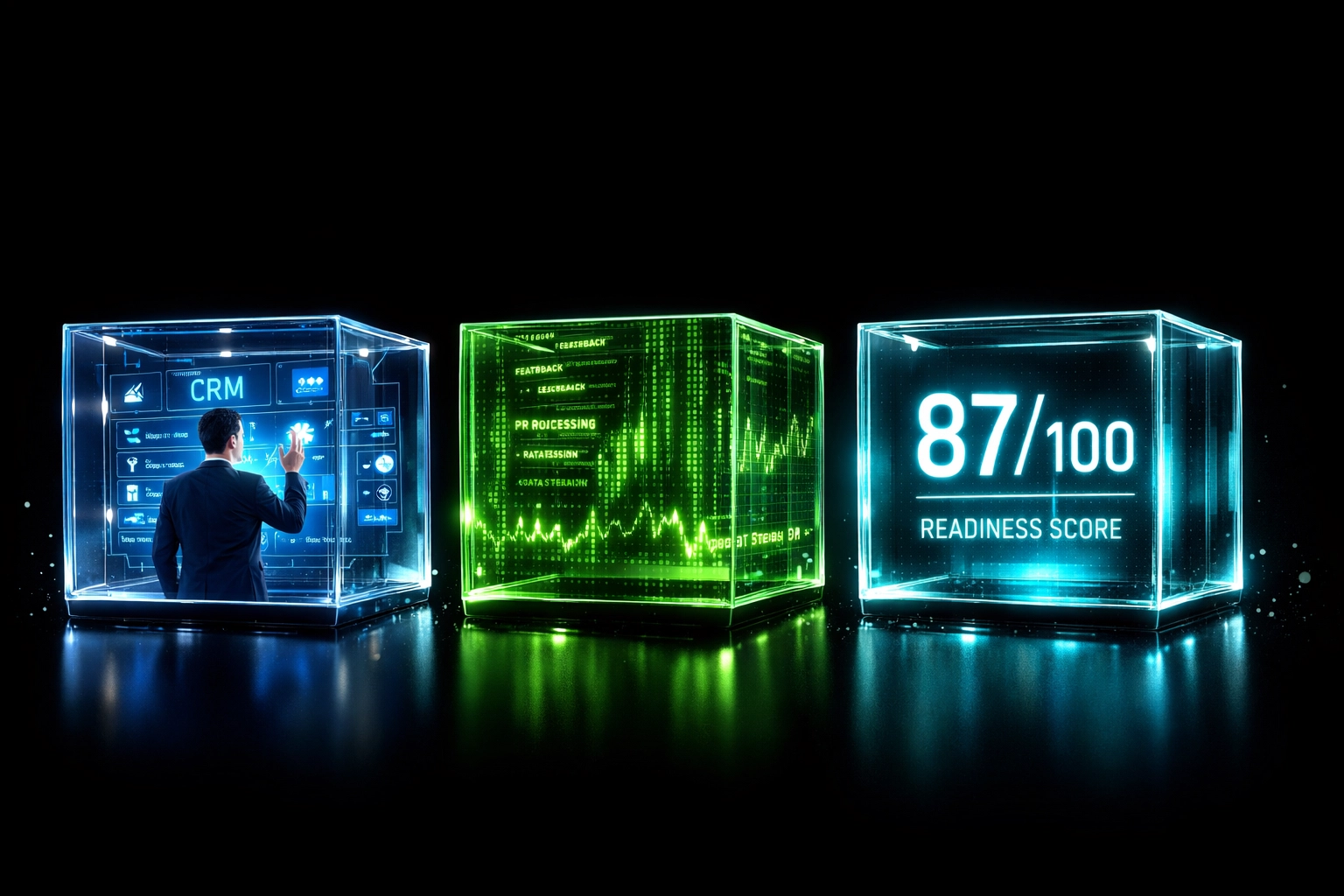
Handling a live customer complaint in a simulated CRM
Debugging a product workflow with incomplete information
Collaborating with an AI-generated "team" on a time-sensitive deliverable
The simulation adapts in real-time. If you excel at problem-solving but struggle with communication, the AI adjusts the next scenario to test that gap. It's not one-size-fits-all: it's hyper-personalized.
This is where intelligent automation solutions shine. By leveraging custom AI solutions and NLP models, the platform understands context, evaluates nuance, and scores performance objectively. No human bias. No subjective grading.
Step 2: AI-Powered Feedback Loop (Instant, Actionable Insights)
Here's what sets AI assessments apart from traditional methods: real-time feedback.
You don't wait weeks for a grade. You don't wonder where you went wrong. The moment you complete a task, the AI breaks down:
What you did well
Where you struggled
Specific steps to improve
This isn't generic advice like "communicate better." It's targeted: "Your response time in escalation scenarios averaged 40% slower than industry benchmarks. Practice prioritizing urgent tasks using these frameworks."
That's the power of AI automation: instant insights that actually move the needle.
Step 3: The Readiness Score (Your New Resume Line)
Here's the game-changer: a quantifiable, industry-validated score that proves you're ready.
Not a GPA. Not a vague endorsement. A Readiness Score that recruiters can trust because it's backed by real-world simulations and AI-driven analysis.
Imagine walking into a career fair and saying: "I scored 87/100 on the Industry Readiness AI Assessment for Marketing Operations. That puts me in the top 15% of candidates for campaign workflow optimization and cross-channel strategy."
That's not bragging. That's proof.
And for employers? It's a shortcut. Instead of sifting through identical resumes, they see candidates ranked by objective readiness. The hiring decision becomes faster, smarter, and backed by data.
How This Bridges the Campus-to-Career Gap
The campus-to-career gap isn't going away. If anything, it's widening. Employers want plug-and-play talent. Universities deliver theory-heavy graduates.
AI assessments close that gap by:
Validating practical skills, not just academic performance
Personalizing career prep based on individual strengths and weaknesses
Providing employers with objective data, eliminating guesswork in hiring
This isn't about replacing education. It's about augmenting it with real-world proof that students are ready to perform: not just learn.
And for universities and career centers? This is a competitive advantage. Schools that integrate AI-driven readiness assessments into their programs produce graduates who outperform peers. That's a selling point for prospective students and a retention tool for employers.

Real-World Applications: Who Benefits?
Students: Stop guessing if you're ready. Get a score. Get feedback. Get hired.
Universities: Equip students with proof of readiness. Boost placement rates. Attract top-tier recruiters.
Employers: Hire faster. Reduce onboarding time. Cut turnover from poor culture-fit hires.
Career Centers: Replace generic workshops with personalized, AI-powered prep that actually works.
This isn't a futuristic concept. It's happening now. AI-driven assessments are already being deployed in forward-thinking institutions and organizations that refuse to settle for "good enough."
The Bottom Line: Career Fairs Aren't the Problem: Your Prep Is
Career fairs work. The data proves it. But only if you show up with something worth noticing.
A generic resume won't cut it. A handshake won't either. You need proof. Objective, quantifiable, AI-validated proof that you're industry-ready.
The 3-step AI assessment framework gives you that. Real-world simulations. Instant feedback. A Readiness Score that makes recruiters take notice.
So stop blaming the career fair. Start preparing like the job depends on it: because it does.
Ready to prove you're industry-ready? Check out Industry Ready AI and see how a data-driven assessment can bridge the gap between campus and career in 30 days or less.
Comments