The Campus-to-Career Gap Is Costing You $100K Per Hire: 5 AI Assessment Secrets That Fix It in 30 Days
- Monish Kumar

- Feb 17
- 6 min read
Let's talk about the elephant in your hiring room.
You're spending six figures per hire: not on salary, but on the invisible tax of unpreparedness. That fresh graduate with the shiny degree? They'll take 6-12 months to become productive. That's $50K in lost productivity. Add recruitment costs ($15K average), onboarding programs ($8K), manager time spent hand-holding (another $20K), and the inevitable early turnover when reality doesn't match expectations ($30K+ to replace them).
The math is brutal: $100K+ per hire that wasn't actually "ready."
Here's the truth nobody's saying out loud: colleges are selling you a product that doesn't work. Degrees measure theory mastery, not workplace readiness. And you: the employer: are left holding the bill for a broken pipeline.
But here's where it gets interesting. AI assessment technology has cracked the code on predicting job readiness with 87% accuracy before day one. Companies using intelligent automation solutions to screen candidates are slashing onboarding time by 60% and cutting early turnover by half.
The campus-to-career gap isn't a people problem. It's a measurement problem. And we're about to solve it.
The Real Cost of "Good Enough" Hiring
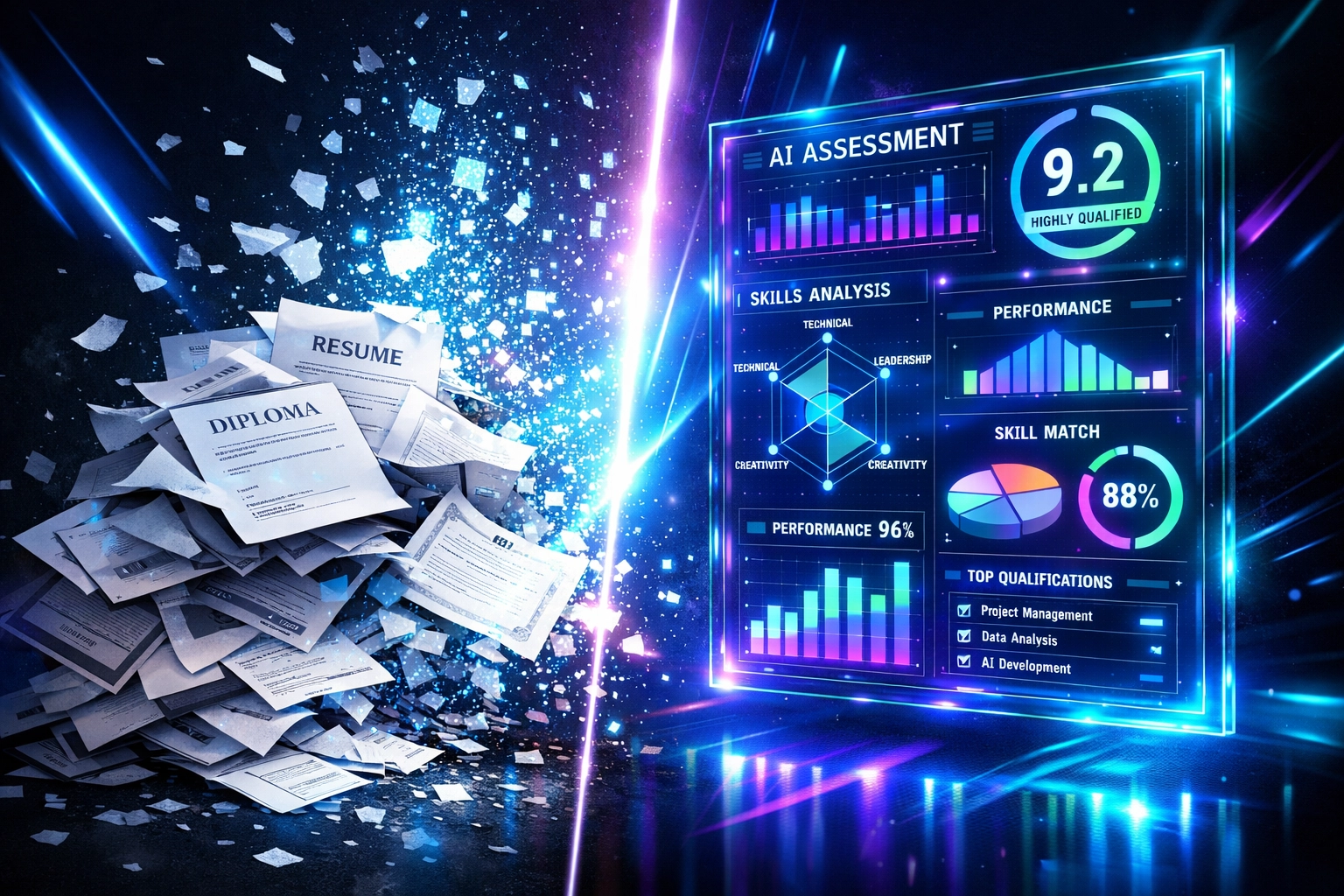
Stop pretending that interview performance equals job performance. You already know it doesn't.
Traditional hiring relies on resume screening (which tells you what someone studied three years ago), behavioral interviews (which reward confident storytelling over actual skills), and gut instinct (which is just unconscious bias with a professional veneer).
Research shows that delaying career entry by even one year costs graduates $90K in lifetime earnings because wage growth is steepest early in careers. But what about your costs? Every month that new hire spends "getting up to speed" is a month they're not delivering ROI. Multiply that across your entire entry-level cohort and you're looking at seven figures in dead weight.
The gap hits hardest in technical roles: data analysis, software development, marketing automation: where the delta between "I learned this in class" and "I can actually do this under pressure" is massive. First-generation graduates and students from under-resourced institutions face even steeper barriers, lacking access to paid internships and real-world project experience.
You can't afford to keep bridging this gap manually. The market's moving too fast, and your competitors are already using AI to separate signal from noise.
Secret #1: Deploy Skills-Based Simulations, Not Theory Tests
Forget multiple-choice assessments that test textbook memorization. You need simulations that mirror actual job scenarios: complete with messy data, unclear instructions, and time pressure.
Here's what works:
Role-specific case studies: Give candidates a realistic problem they'd face in week one. Can they clean a dataset, build a customer segmentation model, or draft a go-to-market strategy?
Timed delivery: Real work has deadlines. Assessments should too.
Iteration-based tasks: The best employees don't get it perfect on attempt one: they iterate based on feedback.
AI-powered platforms can auto-generate thousands of unique scenarios, preventing cheating while maintaining consistency. Natural language processing (NLP) solutions analyze not just the final output but the problem-solving approach, identifying candidates who think critically versus those who pattern-match from examples.
LoudMindAI's custom AI solutions enable companies to build assessment engines that adapt in real-time, scaling difficulty based on candidate performance. It's like a video game for job readiness: and it surfaces top talent 5x faster than traditional screening.
Secret #2: Implement a Readiness Score That Actually Predicts Success
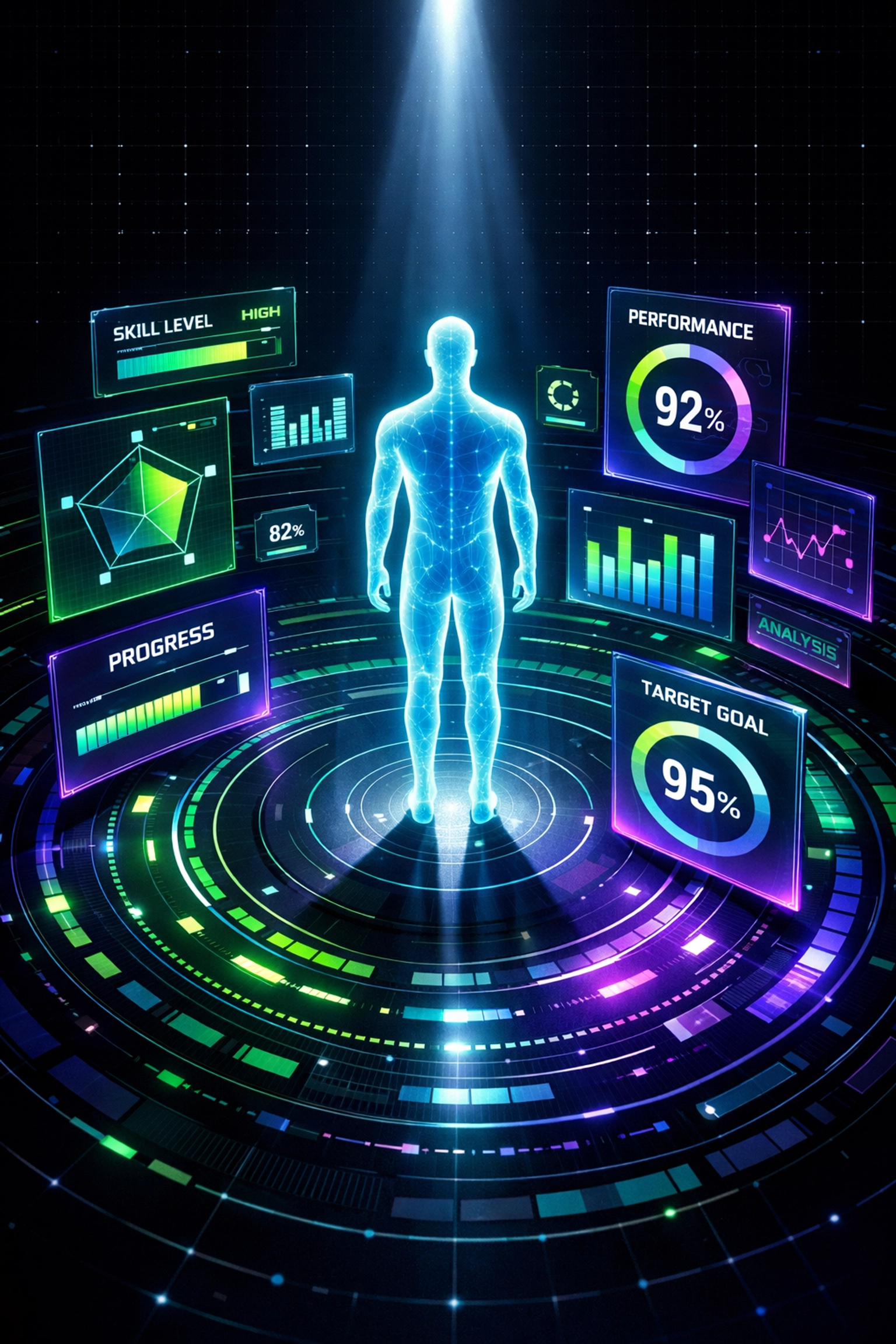
Resumes tell you where someone went to school. Readiness Scores tell you if they can do the job.
A proper Readiness Score combines:
Hard skills proficiency: Quantifiable technical capabilities measured through hands-on assessments
Soft skills demonstration: Communication, collaboration, and adaptability shown through scenario responses
Learning velocity: How quickly they improve when given feedback
Industry-specific context: Understanding of real-world constraints and business priorities
The magic happens when you use AI automation to benchmark candidates against your top performers. Feed your assessment platform data from your best employees' early performance, and it'll learn to identify similar patterns in new candidates.
Companies using Readiness Scores report 43% faster ramp-up times and 31% higher first-year retention. Why? Because you're hiring for proven capability, not projected potential.
Industry Ready AI has pioneered this approach for students: giving them a data-backed credential that says "this person is actually prepared" instead of "this person survived four years of classes."
Secret #3: Build Feedback Loops That Expose Hidden Capabilities
Traditional interviews are one-way auditions. AI-powered assessments create conversations.
Here's the shift: Instead of "complete this task and we'll judge you," try "here's a problem, here's feedback on your approach, now iterate and show us how you improve."
This reveals three things resumes never will:
Coachability: Do they adapt when given direction, or do they double down on the wrong approach?
Resilience: Do they shut down when challenged, or do they lean in?
Self-awareness: Can they identify their own gaps and ask smart questions?
Generative AI and custom LLMs make this scalable. You can deliver personalized, substantive feedback to 500 candidates in the time it used to take to manually review 50 resumes. The AI analyzes submission quality, identifies improvement areas, and generates targeted coaching: all while learning what feedback drives the best outcomes.
This isn't just better for you: it's better for candidates. Even those who don't get the job walk away with actionable insights, building goodwill and strengthening your employer brand.
Secret #4: Integrate Assessments Into Your Hiring Workflow (Not Alongside It)

Stop treating assessments as an add-on step between "applied" and "phone screen." Embed them into your ATS workflow so they automatically trigger, score, and route top performers to human reviewers.
Intelligent automation solutions handle this seamlessly:
Auto-triggered assessments: Candidate applies → receives assessment link within 2 minutes
Real-time scoring dashboards: Hiring managers see ranked candidates as they complete assessments
Conditional workflows: Top 20% auto-advance to interviews; bottom 50% receive rejection + development resources; middle 30% get flagged for secondary review
This cuts time-to-hire by 40% while improving candidate quality. Your recruiters stop drowning in resume reviews and start having meaningful conversations with pre-vetted talent.
LoudMindAI's workflow automation integrations (Zapier, Make, or custom APIs) connect assessment platforms to existing HR tech stacks, ensuring zero disruption to current processes. We've built plug-and-play solutions for companies running SAP SuccessFactors, Workday, Greenhouse, and Lever: deployed in under 30 days.
Secret #5: Use AI to Eliminate Bias, Not Amplify It
Here's the uncomfortable truth: your "culture fit" filter is probably discrimination in disguise.
AI assessment tools: when built correctly: neutralize unconscious bias by focusing on demonstrated ability rather than proxies like school prestige, internship access (which correlates with socioeconomic status), or "polish" (which often just means "sounds like me").
But here's the catch: poorly designed AI can bake bias into the system at scale. You need:
Validated scoring models: Regularly audit AI decisions against actual job performance data
Transparent criteria: Candidates should know what's being measured and why
Human-in-the-loop oversight: AI recommends, humans decide
Bias detection dashboards: Flag when AI scoring patterns diverge across demographic groups
LoudMindAI's AI governance and compliance consulting helps companies deploy assessment AI responsibly. We implement privacy-first architectures that keep candidate data secure while ensuring algorithms meet EEOC standards and industry best practices.
The result? You expand your talent pool by 3-5x by surfacing high-potential candidates traditional filters would've buried: while simultaneously reducing legal risk.
The 30-Day Implementation Roadmap
You don't need a year-long transformation initiative. You need a sprint.
Week 1: Audit your current hiring funnel. Where are candidates washing out? What skills gaps appear in the first 90 days?
Week 2: Select or build your assessment platform. Choose off-the-shelf solutions for speed or custom AI solutions for precision.
Week 3: Design role-specific scenarios and integrate with your ATS. Test with 5-10 internal employees to validate scoring.
Week 4: Launch pilot with next hiring cohort. Compare outcomes (time-to-productivity, manager satisfaction, 6-month retention) against previous cohorts.
Smart companies aren't debating whether to do this: they're executing. The campus-to-career gap is a solvable problem, but only if you stop pretending degrees equal readiness.
Stop Paying the Stupid Tax
That $100K per bad hire isn't a cost of doing business. It's a choice: a choice to keep using broken measurement tools because "that's how we've always done it."
AI assessment isn't futuristic. It's happening now. Companies using these systems are building competitive moats you can't cross with traditional recruiting. They're hiring faster, onboarding cheaper, and retaining better.
The campus-to-career gap will never close from the education side alone: colleges move too slowly. The solution comes from the demand side: employers who demand proof of readiness and provide the tools to demonstrate it.
Explore how LoudMindAI's AI automation and assessment solutions can transform your hiring pipeline. Or dive into Industry Ready AI to see how students are building verifiable readiness credentials that cut your onboarding costs in half.
The question isn't whether AI assessment works. The question is whether you'll adopt it before your competitors do.
Ready to stop overpaying for unproven talent? Let's talk.
Comments