The Campus-to-Career Gap Is Brutal: How Custom AI Solutions Are Bridging It Fast
- Monish Kumar

- Jan 28
- 5 min read
Let's not sugarcoat it.
Only 30% of 2025 graduates landed full-time jobs in their field. That's down from 41% just one year earlier. More than 60% of the Class of 2026? They're already pessimistic about their career prospects before they've even tossed their caps.
The campus-to-career gap isn't just widening: it's becoming a chasm. And the traditional playbook? It's not working anymore.
But here's what nobody's talking about: custom AI solutions are quietly revolutionizing how we bridge this gap. Not in five years. Not "eventually." Right now.
The Disconnect Is Real: And It's Costing Everyone
Here's the brutal truth that keeps career counselors up at night:
Employers want job-specific technical skills. Colleges keep emphasizing soft skills like critical thinking and communication. Both matter: but the mismatch is killing job placement rates.
The numbers tell the story:
Nearly 50% of recent graduates feel unprepared to even apply for jobs
20% say their programs didn't help them build professional networks
Over a third wish their schools had offered more employer partnerships
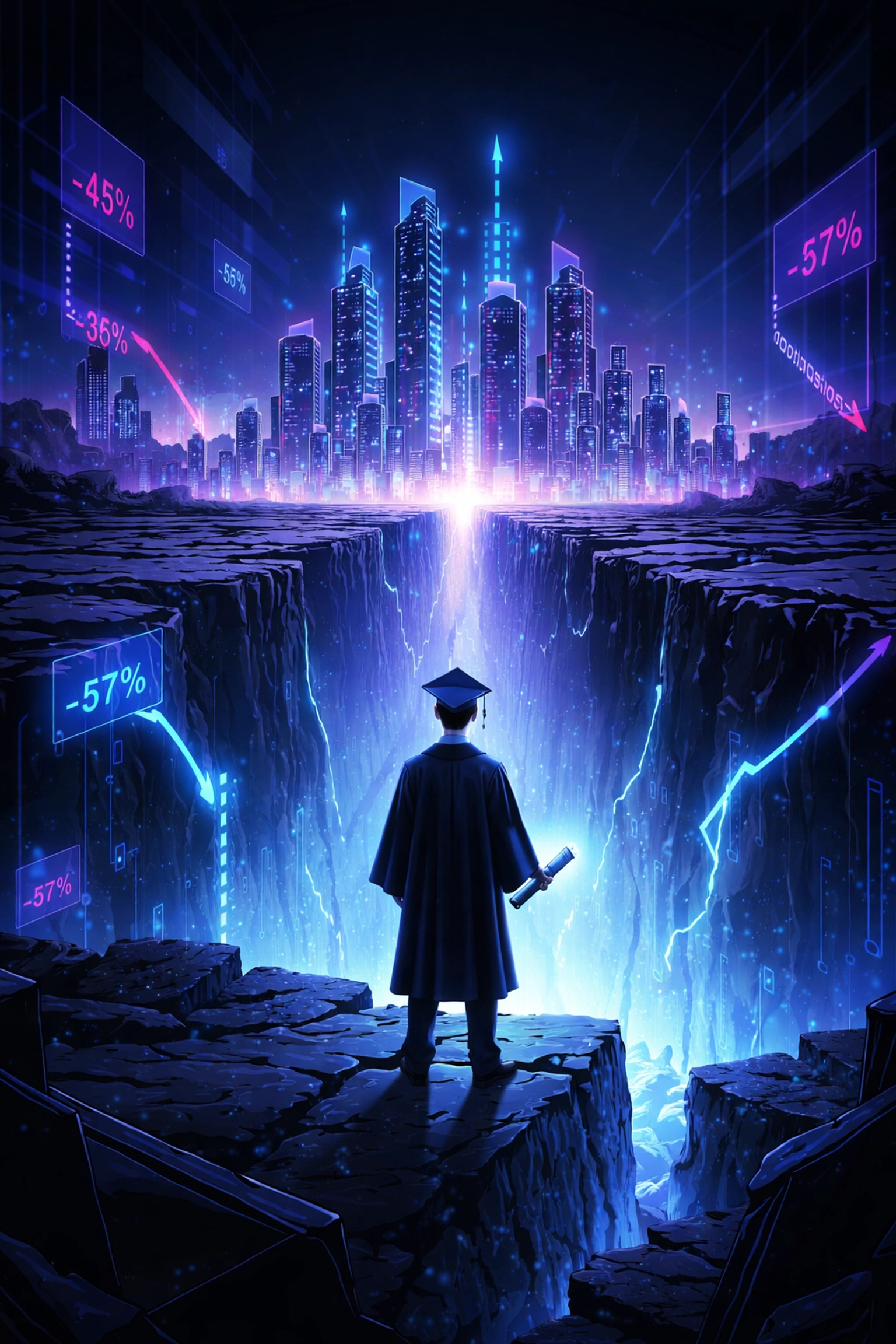
And it gets worse. Four structural factors are driving this crisis:
Insufficient career information reaching students at the right time
Weak incentives for institutions to produce career-ready graduates
Organizational structures that don't support accountability
Generational differences affecting how Gen Z approaches career preparation
Traditional career services: resume workshops, job boards, the occasional career fair: can't solve a problem this systemic. They're bringing a pamphlet to a gunfight.
Why Traditional Solutions Keep Failing
Let's be real about what's broken.
Career centers are understaffed and overwhelmed. One counselor for every 500+ students isn't guidance: it's triage. Generic advice doesn't work when every industry is transforming at breakneck speed. And those employer partnerships everyone keeps talking about? They're inconsistent, hard to scale, and often benefit only a handful of connected students.
The gap between "what you learned" and "what employers need" has never been wider. AI is reshaping entire industries faster than curriculum committees can schedule meetings.
The old model assumed a predictable path: go to school, get a degree, get a job, climb the ladder. That linear narrative is dead.
Today's graduates need to demonstrate specific, verifiable skills. They need to understand where their gaps are: before an employer rejects them. They need personalized guidance at scale.
And that's exactly where intelligent automation solutions and custom AI solutions are stepping in.
Enter Custom AI: The Bridge Nobody Expected
Here's where things get interesting.
Custom AI solutions aren't just automating boring tasks anymore. They're fundamentally changing how we assess, prepare, and match talent to opportunities.
Think about what AI can actually do:
Analyze thousands of job postings to identify the exact skills employers demand: in real-time
Assess student capabilities through adaptive, intelligent testing that goes way beyond multiple choice
Generate personalized learning pathways that close specific skill gaps
Match candidates to roles based on actual competencies, not just keywords on a resume
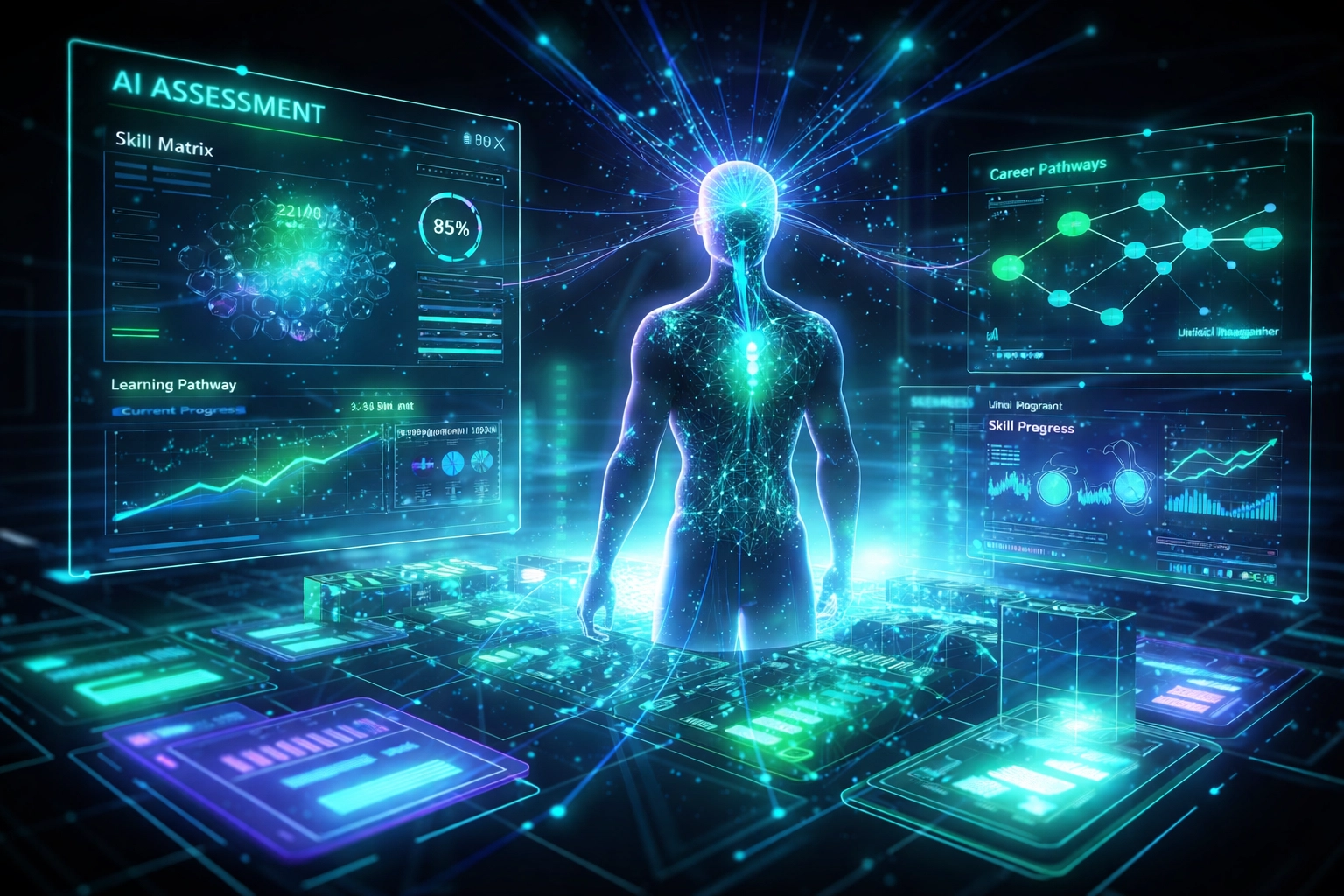
This isn't theoretical. It's happening. And the institutions that adopt these solutions are seeing dramatically better outcomes for their students.
AI-Powered Assessments: Beyond the Traditional Test
Traditional assessments measure what you memorized. AI-powered assessments measure what you can actually do.
Here's the difference:
Old approach: A 100-question multiple choice test on marketing principles. You either pass or fail. No actionable insights.
AI-powered approach: An adaptive assessment using NLP solutions that analyzes your responses in real-time. It identifies not just what you got wrong, but why. It maps your strengths against actual industry requirements. It generates a personalized report showing exactly where you stand: and what to do next.
The power of NLP solutions here is massive. Natural language processing can:
Evaluate written responses for depth, accuracy, and practical application
Analyze communication patterns to assess soft skills alongside technical ones
Compare student outputs against industry benchmarks
Provide nuanced feedback that actually helps people improve
This isn't about replacing human judgment. It's about augmenting it with data-driven insights that simply weren't possible before.
The Readiness Score: Quantifying Career Preparedness
Here's a concept that's gaining serious traction: the Readiness Score.
Think of it as a credit score: but for career preparedness. Instead of measuring your financial health, it measures how prepared you are for specific career paths.
A comprehensive Readiness Score powered by AI automation considers:
Technical skills verified through practical assessments
Industry knowledge benchmarked against current employer expectations
Soft skills evaluated through AI-analyzed simulations
Portfolio strength measured against successful candidates in your target field
Network connectivity analyzing the quality and relevance of professional connections
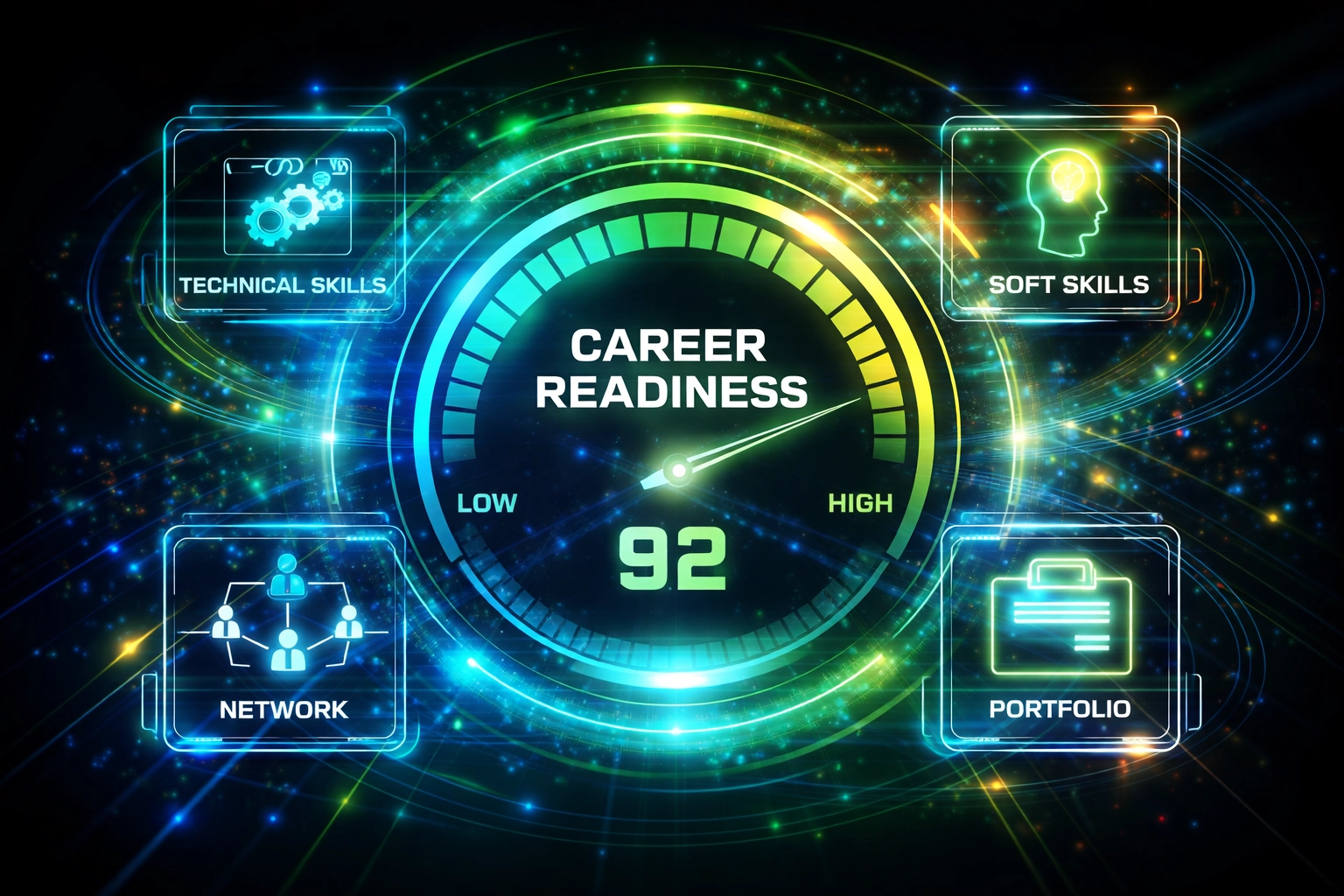
The beauty of this approach? It's transparent. Students know exactly where they stand. They know what to improve. And they can track their progress over time.
For institutions, a Readiness Score dashboard provides unprecedented visibility into program effectiveness. Which courses are actually moving the needle? Where are the systemic gaps? How do your graduates compare to industry benchmarks?
This is the kind of actionable intelligence that transforms career services from reactive to proactive.
How AI Automation Scales What Humans Can't
Let's talk about scale: because that's where the magic really happens.
A single career counselor might have meaningful conversations with 200 students per year. An AI automation system can provide personalized guidance to 20,000. That's not a replacement for human connection. It's a force multiplier.
Consider the workflow:
Initial AI assessment identifies each student's unique profile
Automated matching algorithms surface relevant opportunities
Personalized content delivery provides targeted resources and learning paths
Progress tracking monitors improvement and flags students who need intervention
Human counselors focus their limited time on high-impact conversations
This is intelligent automation at its best: handling the volume work so humans can do what humans do best: mentor, encourage, and provide the nuanced guidance that only comes from experience.
Building the Bridge: What Custom Solutions Actually Look Like
Not every institution has the same needs. That's why custom AI solutions matter more than off-the-shelf tools.
A comprehensive solution for bridging the campus-to-career gap might include:
Knowledge-first RAG systems that ground AI responses in your institution's specific data: student records, employer feedback, placement outcomes: reducing hallucinations and increasing relevance
Autonomous AI agents that handle multi-step workflows like application tracking, interview scheduling, and follow-up communications
Sentiment analysis dashboards that monitor student confidence and engagement throughout their career preparation journey
Custom LLMs trained on your institution's voice and values, ensuring consistent messaging across all touchpoints
The key is integration. These tools need to work together, sharing data and insights to create a cohesive experience for students and administrators alike.
The Institutions That Move Now Will Win
Here's the uncomfortable truth: the gap between AI-forward institutions and everyone else is about to explode.
Schools that implement intelligent automation solutions today will:
Dramatically improve placement rates
Attract better students who see the value proposition
Build stronger employer relationships based on better-prepared graduates
Generate data that continuously improves their programs
Schools that wait? They'll be playing catch-up for years.
The technology isn't the barrier anymore. Custom solutions are more accessible than ever. The barrier is mindset: the willingness to acknowledge that the old ways aren't working and to embrace new approaches.

What Happens Next
The campus-to-career gap is brutal. But it's not inevitable.
Custom AI solutions offer a path forward: one that combines the scale of automation with the personalization students desperately need. AI-powered assessments, Readiness Scores, and intelligent workflow automation aren't buzzwords. They're practical tools that are transforming outcomes right now.
The question isn't whether AI will reshape career preparation. It's whether you'll be leading that change or scrambling to catch up.
Ready to explore how custom AI solutions can bridge the gap for your institution or organization? Book a consultation with LoudMindAI and let's build something that actually moves the needle.
Comments