Your Students Are Industry-Ready (On Paper): The Brutal Truth About Bridging the Campus-to-Career Gap with AI
- Monish Kumar

- Feb 13
- 5 min read
Your students have the degrees. They've got the certifications. Their resumes look impressive: on paper.
So why are employers still saying they're not ready?
Here's the uncomfortable truth: The campus-to-career gap isn't closing. It's widening. And while you're celebrating graduation rates and placement statistics, hiring managers are pulling their hair out over graduates who can't translate classroom theory into real-world execution.
You know what's even more brutal? You're probably using AI tools already: chatbots for admissions guidance, algorithm-based job matching, maybe even some predictive analytics: and your students are still hitting the same wall when they enter the workforce.
Let's talk about why.
The "Industry-Ready" Illusion
Georgia State University found that students using AI chatbots were 3% more likely to re-enroll. InsideTrack improved retention rates by up to 15% with their predictive analytics. These are impressive numbers: for keeping students in school.
But here's what those statistics don't tell you: None of them measure whether graduates can actually perform when they walk into an office on day one.
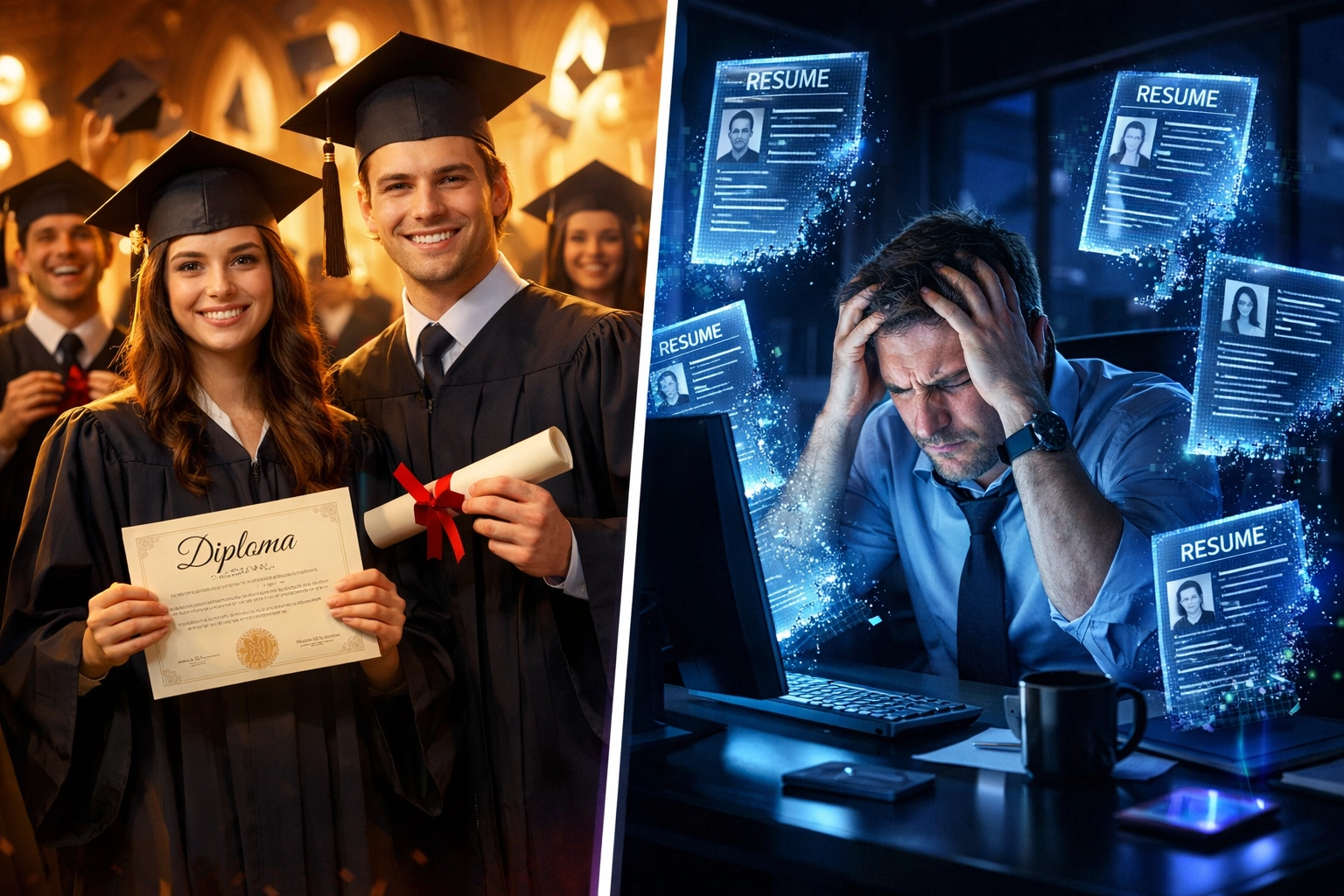
You're optimizing for enrollment and completion. Employers are screaming for competence and application. See the disconnect?
Your students graduate with knowledge: theoretical frameworks, textbook solutions, perfect test scores. What they're missing? The ability to apply that knowledge in messy, real-world scenarios where there's no rubric and the "right answer" changes based on stakeholder priorities.
That's not a curriculum problem. That's an assessment problem.
What Current AI Tools Are Actually Doing (And What They're Not)
Let's be honest about the AI tools you're likely already using:
Career chatbots answer FAQs and guide students through processes
Job-matching algorithms connect profiles with opportunities based on keywords
Intelligent tutoring systems provide personalized learning paths
Predictive analytics identify which students need intervention
Helpful? Absolutely.
Industry-ready? Not even close.

Here's what these tools aren't doing:
Assessing whether students can apply their learning to novel situations
Measuring problem-solving skills in ambiguous contexts
Evaluating collaboration, communication, and adaptability in real-time
Providing employers with objective, comparable readiness metrics
Generating actionable insights on specific skill gaps that need closing
You're using intelligent automation solutions to streamline your processes. But you're not using them to validate whether your graduates are actually prepared for what's waiting on the other side of the stage.
The Employer Side of This Disaster
Talk to any hiring manager and you'll hear the same frustration: "They look great on paper, but..."
But what?
They can't translate technical knowledge into business solutions
They struggle with projects that don't have clear instructions
They lack the soft skills to navigate workplace dynamics
They need extensive hand-holding during the first 6-12 months
Employers aren't rejecting your students because they're difficult. They're rejecting them because the hiring process gives them no reliable way to distinguish paper credentials from actual capability.
A resume tells you what someone studied. An interview tells you how well they can talk about what they studied. Neither tells you whether they can do the work.
And here's the kicker: This gap is costing employers billions in bad hires, extended onboarding, and early turnover. It's costing your graduates their confidence and career momentum.
AI Assessments: The Bridge You're Not Building
This is where the conversation needs to shift: from AI as an administrative tool to AI as an assessment and validation engine.
What if instead of just matching students to jobs based on keywords, you could provide employers with an objective, data-driven Industry Readiness Score? A metric that actually measures:
Applied problem-solving in domain-specific scenarios
Skill application across technical and soft competencies
Adaptability when facing novel challenges
Communication in professional contexts
Real-world readiness that goes beyond grades
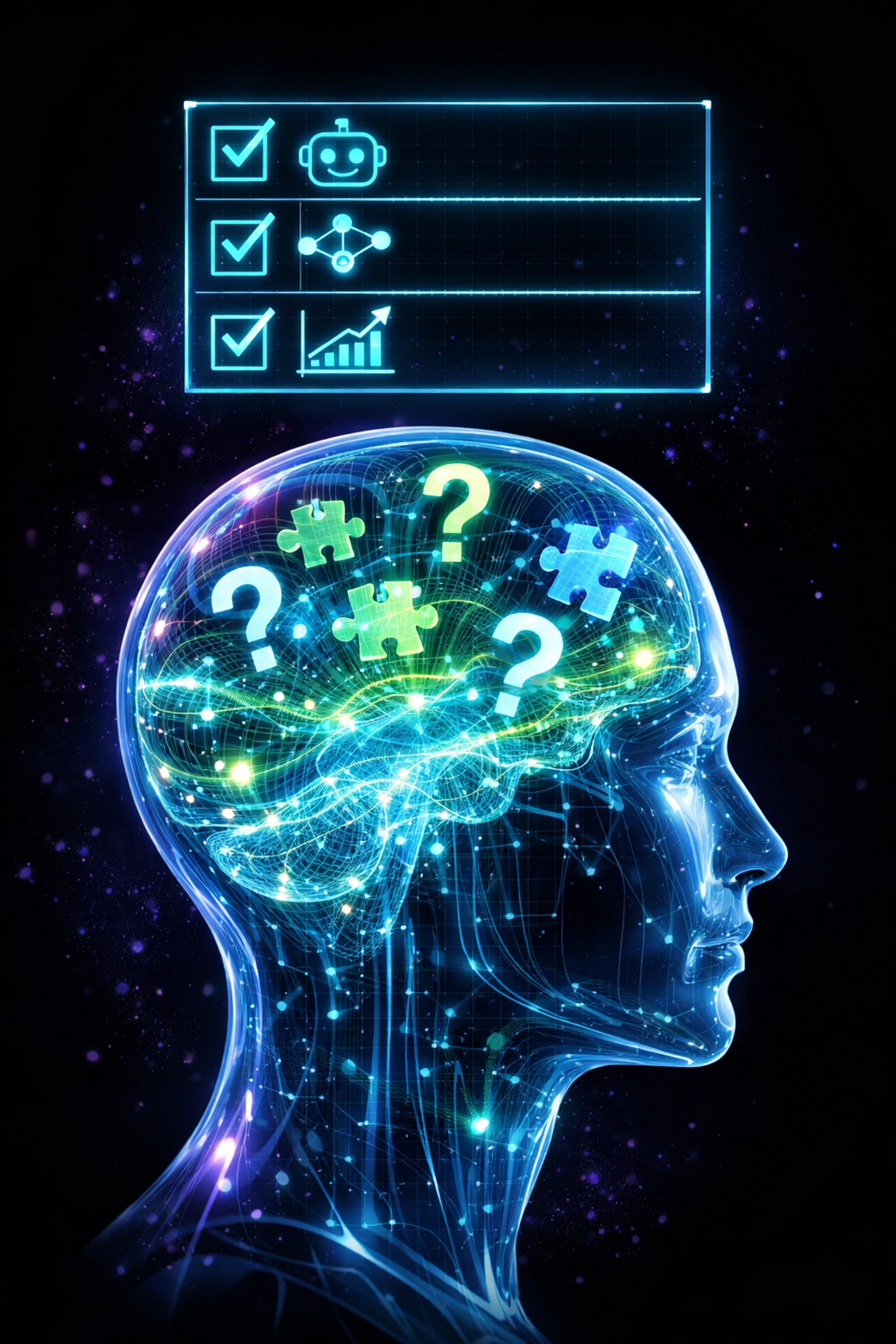
This isn't science fiction. The technology exists right now.
Custom AI solutions powered by natural language processing and multimodal assessment engines can evaluate student responses to complex, real-world scenarios. They can analyze not just what students know, but how they apply it under pressure, how they communicate their reasoning, and how they adapt when the parameters change.
Companies like LoudMindAI are already deploying knowledge-first RAG systems and autonomous AI agents for workflow automation in enterprises. The same technology that's revolutionizing business operations can revolutionize how we validate student readiness.
The Readiness Score: Your Competitive Differentiator
Imagine this scenario:
Your graduate applies for a position. Instead of just submitting a resume and cover letter, they include their AI-validated Industry Readiness Score: a comprehensive assessment that demonstrates their ability to:
Solve ambiguous business problems
Apply technical skills in practical contexts
Collaborate effectively in team scenarios
Communicate complex ideas clearly
Adapt to unexpected challenges
The employer doesn't have to guess. They don't have to spend three rounds of interviews trying to figure out if this candidate can actually do the work. They have objective, comparable data that shows exactly where this graduate excels and where they might need support.
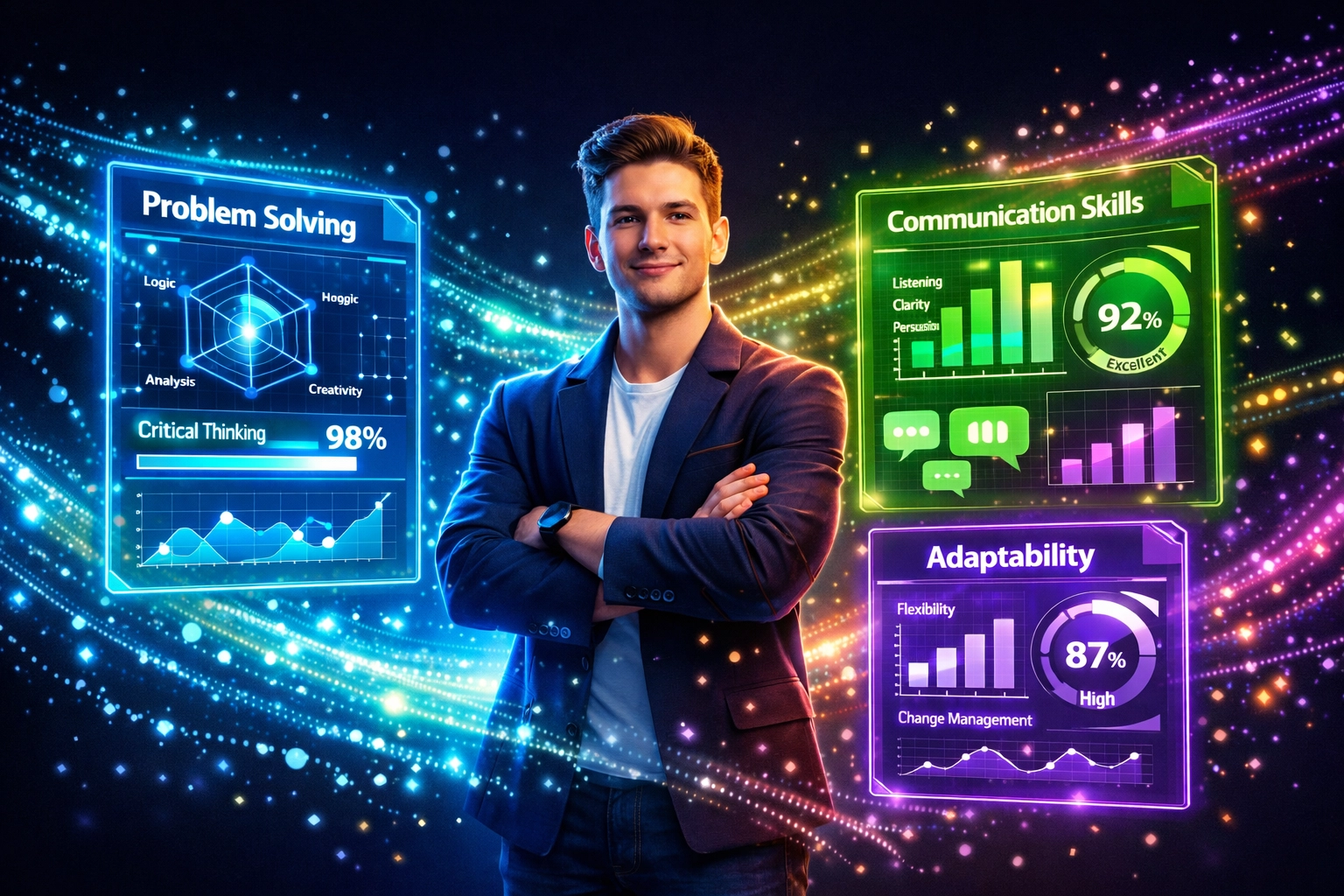
Now scale that across your entire graduating class.
Suddenly you're not just another institution churning out degrees. You're a trusted talent pipeline that employers actively seek out because your validation process actually means something.
That's the difference between placement rates and placement quality. Between graduates who struggle for months to find opportunities and graduates who have employers competing for them.
The Implementation Reality Check
Here's what you're probably thinking: "This sounds expensive. Complicated. Time-consuming."
Wrong on all three counts.
Modern AI automation platforms can deploy assessment systems that integrate directly into your existing career services infrastructure. We're talking plug-and-play solutions with:
Pre-built assessment frameworks across industries and skill domains
Automated scoring and reporting that eliminates manual grading
Real-time analytics dashboards showing trends and gaps across your student population
Privacy-first deployment that keeps sensitive student data secure
The setup? Weeks, not months. The cost? A fraction of what you're already spending on career services that aren't moving the needle.
And the ROI? Try differentiation in an increasingly competitive higher education market. Try graduates who actually land jobs: and keep them. Try employer partnerships that go beyond job fairs because you're providing real value.
The Uncomfortable Question You Need to Answer
Are you ready to move beyond celebrating enrollment numbers and graduation rates and start measuring the metric that actually matters: industry readiness?
Because if you're not, someone else will. And their graduates will get the opportunities your students deserve.
The campus-to-career gap isn't going to close itself. Generic job-matching algorithms and FAQ chatbots aren't cutting it. You need AI assessment tools that validate capability, not just credentials.
The technology exists. The framework exists. The question is: Are you willing to lead, or will you watch from the sidelines while other institutions redefine what "industry-ready" actually means?
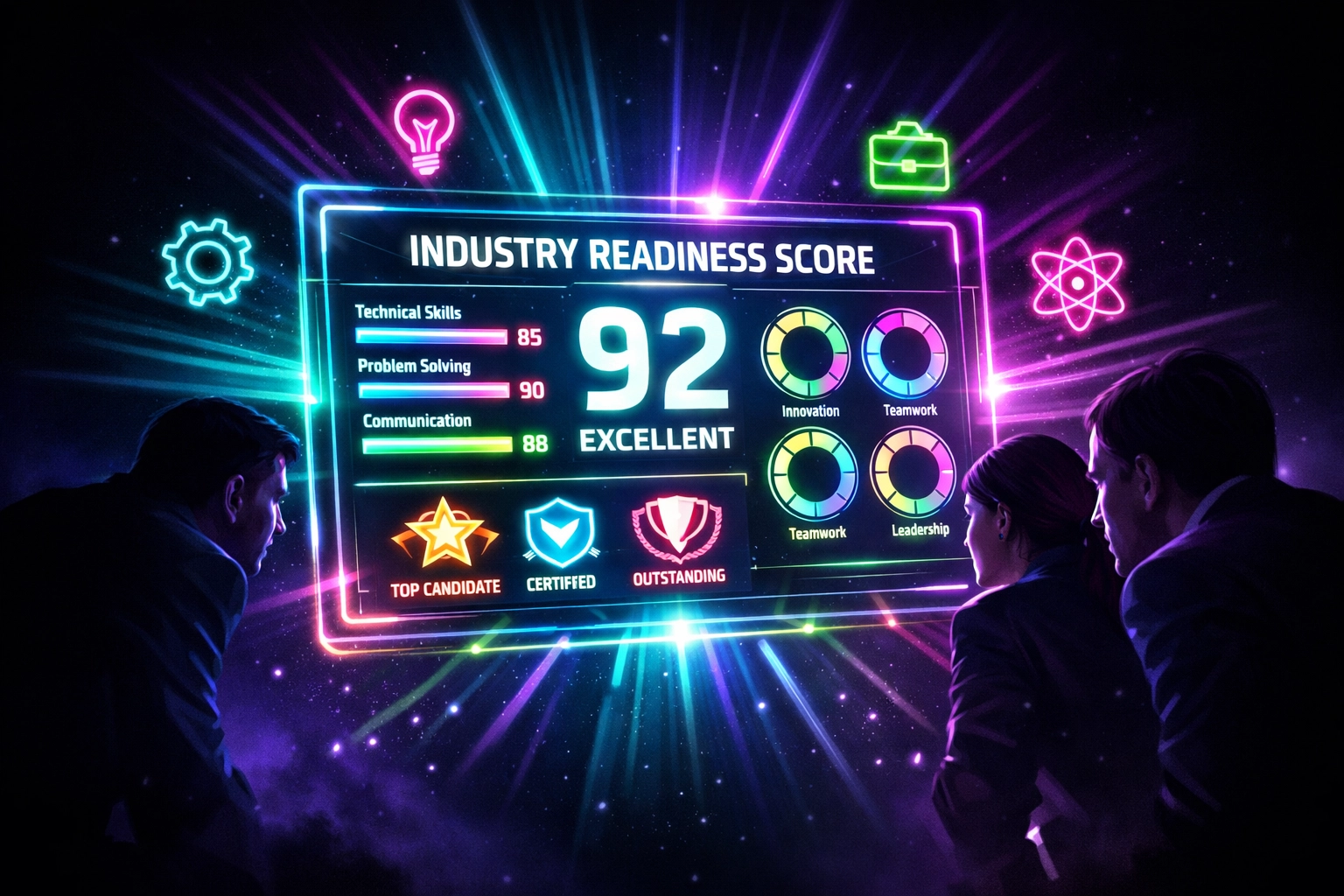
Check out Industry Ready AI and see what objective, AI-powered student assessment actually looks like. Or keep doing what you've always done and wonder why employer partnerships stay surface-level and graduates struggle to launch.
Your students aren't the problem. Your assessment gap is.
Time to bridge it.
Want to see how AI-powered readiness assessment could transform your career services? Discover our Industry Ready AI platform or read more about bridging the campus-to-career gap in our latest insights.
Comments