Are Traditional Diplomas Dead? Why AI Automation is the New Standard for Industry Readiness
- Monish Kumar

- Mar 24
- 5 min read
You spent four years in a classroom. You racked up thousands in student debt. You memorized theories that were outdated by the time you reached your sophomore year. And now, you’re standing at the edge of the professional world with a piece of paper that says you’re "qualified."
But here’s the brutal truth: the market doesn't care about your diploma.
In 2026, the traditional degree is no longer the golden ticket: it’s a participation trophy. While universities are still teaching the "what" of business and technology, the industry has moved on to the "how." Specifically, how you can leverage ai automation to drive results from day one.
The gap between campus and career has become a canyon. And if you’re relying on your GPA to bridge it, you’re already falling behind.
The Diploma Delusion: Why Academia is Losing the Race
Let’s be real. The academic cycle is too slow for the AI era. By the time a curriculum is approved, printed, and taught, the underlying technology has evolved three times over. Traditional education focuses on deep theory, but the modern workforce demands intelligent automation solutions.
Hiring managers are tired of training "qualified" graduates who don't know the first thing about actual workflow efficiency. They are looking for candidates who understand custom ai solutions and can implement them to save time and money.
If you think your degree proves you’re ready for the job, you’re suffering from the Diploma Delusion. The real world doesn't grade on a curve; it grades on ROI. This is why the campus-to-career gap is a lie: the gap is actually a lack of practical, AI-driven skills.

The New Gold Standard: The Readiness Score
If diplomas are losing their shine, what’s replacing them? It’s called the Readiness Score.
At LoudMindAI, we’ve seen the shift firsthand. Companies are moving away from the "degree vs. no degree" debate. Instead, they are asking: Can this person actually do the work?
An AI-driven Readiness Score evaluates your ability to navigate the modern tech stack. It measures your proficiency in using nlp solutions to automate communication, your skill in deploying autonomous agents, and your capacity to manage data sovereignty within a corporate environment.
A high GPA might get you an interview, but your Readiness Score matters more than your GPA when it comes to actually landing the offer. This score is a real-time reflection of your ability to plug and play into a company’s existing ecosystem.
Why B2B Leaders are Choosing AI Assessments over Resumes
From a business perspective, the traditional hiring process is a massive financial drain. Companies are wasting $50k per hire on candidates who look good on paper but fail in practice.
Enter AI assessments.
For the modern CEO or Founder, an AI assessment is a risk-mitigation tool. It provides a data-backed look at a candidate’s problem-solving skills and technical aptitude. Why look at a static resume when you can see how a candidate interacts with a simulated ai automation workflow?
This is why we say resumes are dead. They are a relic of a pre-AI world. Today, intelligent automation solutions allow companies to vet thousands of candidates in minutes, identifying those who have the highest "Industry Readiness" without ever looking at which school they attended.
The Pivot: From Student to AI Strategist
If you’re a student or a recent graduate, the message is clear: stop acting like a student and start acting like an AI strategist.
The industry doesn't need more "entry-level" employees who need their hands held. It needs people who can walk in and say, "I can automate this manual process using a custom LLM," or "I can streamline your sentiment analysis dashboard using advanced nlp solutions."
You need to bridge the gap yourself. Don't wait for your university to update its syllabus. AI assessments are the only real way to prove industry readiness. They show that you aren't just a consumer of technology: you’re a creator of efficiency.

Bridging the Gap with Custom AI Solutions
At LoudMindAI, we don't just talk about the gap; we close it. We specialize in providing the tools that make both businesses and candidates more efficient.
For businesses, our custom ai solutions help you stop hiring based on "vibes" and start hiring based on verified data. We provide the infrastructure for AI strategy audits and automated workflows that allow your team to 10x their productivity.
For the individual, we provide the path to becoming "industry ready." Whether it’s through understanding how to deploy privacy-first RAG (Retrieval-Augmented Generation) or mastering the use of autonomous AI agents, the goal is the same: eliminate the barriers to entry.
If you’re still relying on manual workflows, you’re losing money. If you’re still relying on your degree, you’re losing time. Check out how our intelligent automation solutions can 10x your efficiency.
5 Reasons Your Degree is Failing You (and How AI Fixes It)
Stagnant Knowledge: Degrees teach you what happened five years ago. AI assessments test you on what is happening now.
Lack of Practicality: Universities focus on theory. Ai automation focuses on execution.
High Cost, Low ROI: You can gain industry-ready AI skills in weeks for a fraction of the cost of a semester.
No Performance Data: A degree tells an employer you can pass a test. An AI assessment tells them you can solve a business problem.
The "Manual" Mindset: Traditional education prepares you for manual labor and manual thinking. Industry 5.0 requires an automation-first mindset.
Don't be the person who brings a knife to a gunfight. If you are struggling to get hired, it’s likely because you’re making common mistakes with your campus-to-career prep.
The LoudMindAI Mission: Eliminating Barriers
We believe that the future of work should be accessible to anyone with the drive to master it. That’s why LoudMindAI focuses on expert-led implementation. We take the complexity out of AI.
Whether you need a personal AI consultation to figure out your next career move, or your company needs a complete overhaul of its nlp solutions, we are here to lead the charge.
The industry isn't waiting for you to graduate. It’s waiting for you to be ready.
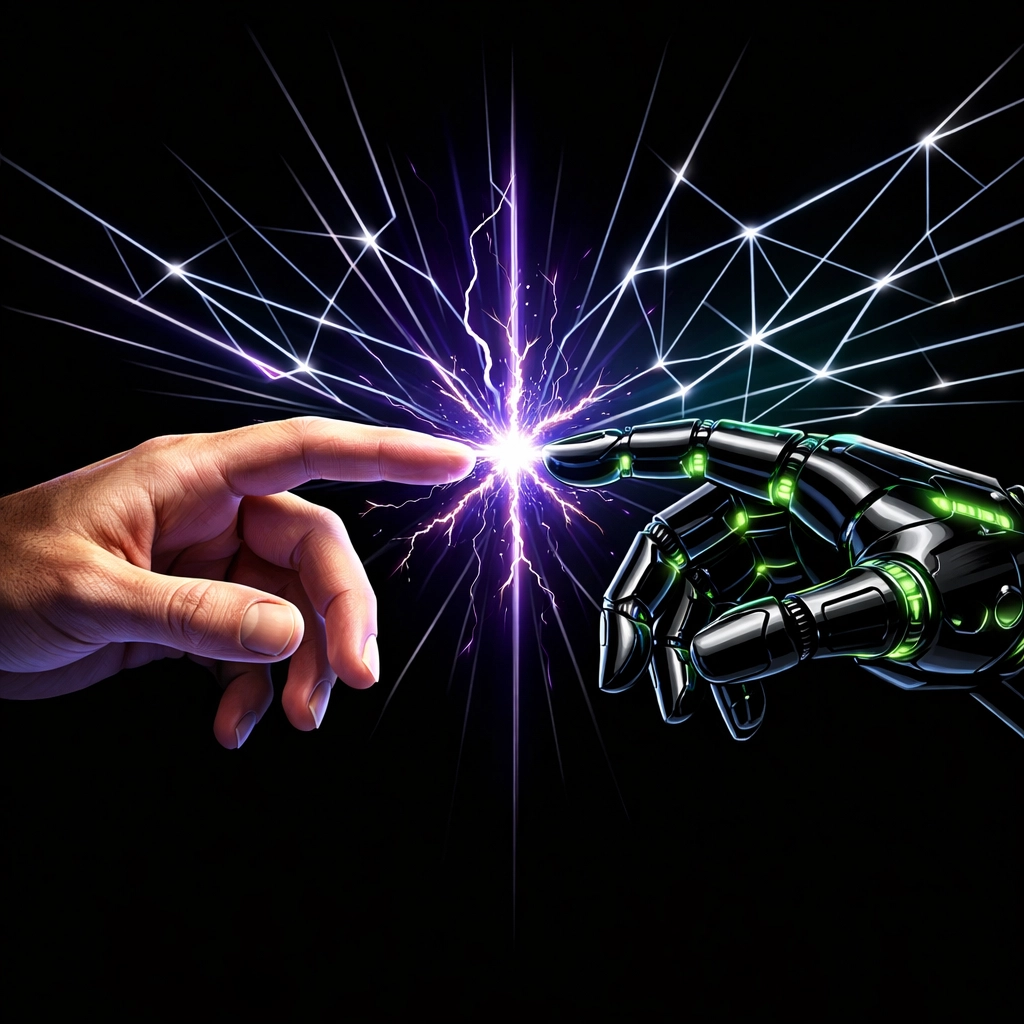
Stop Sending Graduates into the Abyss
To the universities and the HR departments reading this: stop the madness. Stop sending graduates into the workforce without the tools they need to survive. And stop hiring graduates based on the name of their school.
We need to stop sending graduates into the abyss and start providing them with the AI-driven validation they deserve. When we use AI to bridge the campus-to-career gap, everyone wins. Businesses get better talent, and graduates get better jobs.
Conclusion: The Future is Automated
Are traditional diplomas dead? Not entirely: but they are no longer the "standard." The new standard is a combination of foundational knowledge and specialized AI proficiency.
The world is moving toward a future where ai automation is the baseline for every role. From hyper-personalized marketing automation to secure data preparation, the skills that matter are the ones that allow you to do more with less.
Don't let your education be the thing that holds you back. Embrace the tools of the future. Prove your value with a Readiness Score. And if you’re ready to see how AI can transform your workflow or your career, reach out for a consultation.
The era of the "qualified" graduate is over. The era of the "Industry Ready" AI strategist has begun. Are you in, or are you out?
For more insights on how to navigate the AI revolution, visit our blog or learn more about why everyone is talking about AI assessments for graduates.
Comments