The AI Assessment Revolution: Why Your Campus-to-Career Program Is Already Obsolete
- Monish Kumar

- Feb 5
- 5 min read
Let's be brutally honest: your campus-to-career program is limping on borrowed time.
You're still running the same tired playbook: generic resume workshops, cookie-cutter interview prep sessions, and career fairs where students hand out paper resumes like it's 2005. Meanwhile, the hiring landscape has transformed into something unrecognizable. Employers don't care about your perfectly formatted bullet points anymore. They want proof of capability. They want data. They want students who can actually do the work: not just talk about it.
And here's the uncomfortable truth: AI-powered assessment tools are exposing the massive gap between what your program delivers and what the market demands.
The Real Problem Isn't Job Readiness: It's Assessment Obsolescence
Traditional campus-to-career programs operate on a fatal assumption: that completing coursework equals job readiness. It doesn't.
Your students can ace exams, maintain stellar GPAs, and graduate with honors: yet still crash and burn in their first 90 days on the job. Why? Because traditional assessments measure memorization, not application. They test knowledge retention, not problem-solving under pressure. They reward regurgitation, not critical thinking.
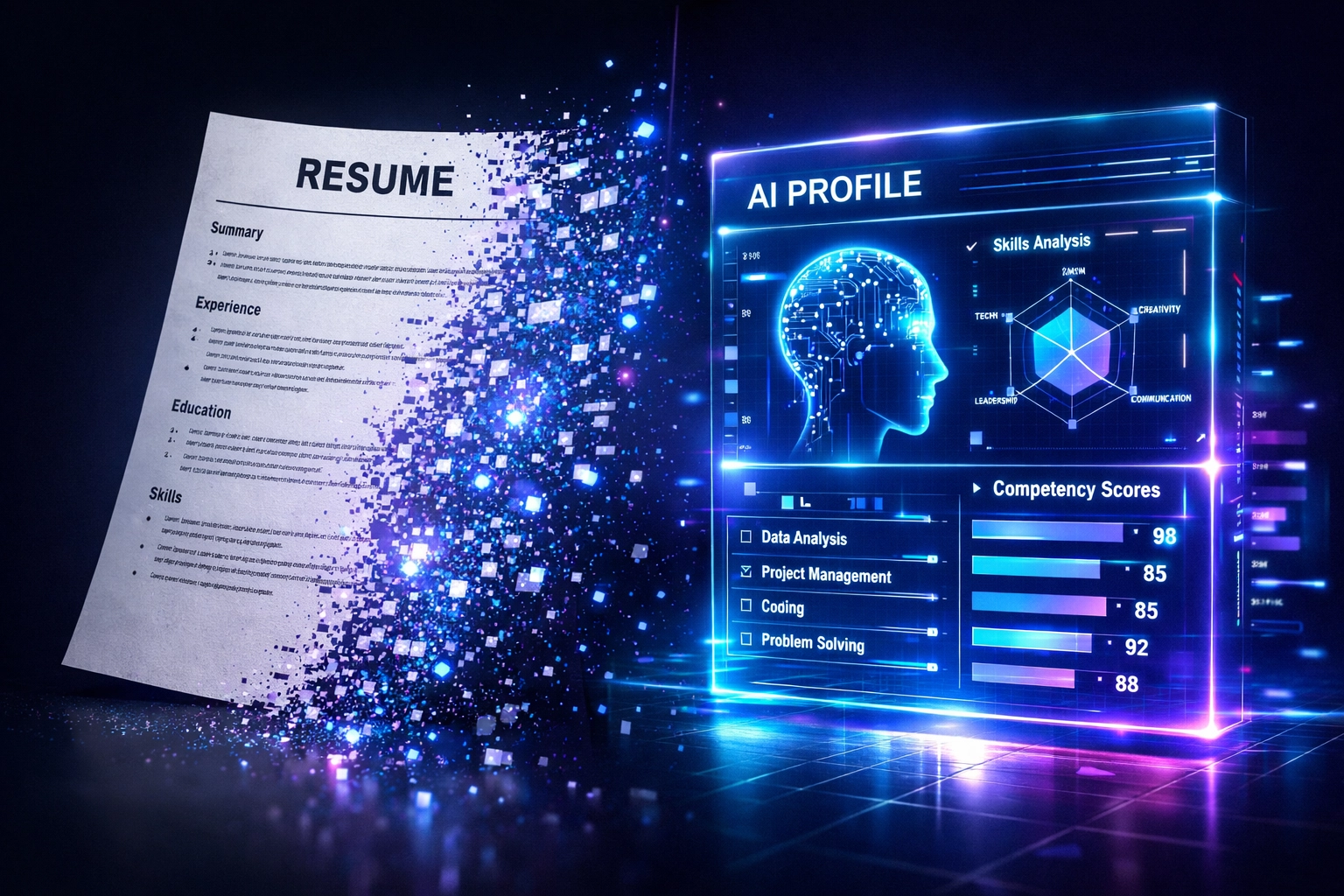
AI assessment platforms are rewriting this equation entirely. They don't just grade answers: they analyze how students arrive at solutions. They track thought processes, identify learning gaps in real-time, and deliver personalized feedback that adapts to individual learning patterns. According to McKinsey research, institutions using AI-driven assessment analytics report 23% improvement in student engagement and 18% better learning outcomes compared to traditional methods.
That's not incremental improvement. That's a paradigm shift.
What AI Assessments Actually Do (And Why Your Program Can't Compete)
Here's where it gets uncomfortable for legacy programs.
AI assessment systems provide capabilities your traditional approach can't touch:
Instant feedback generation that tracks student problem-solving approaches, not just final answers: giving learners immediate course correction instead of waiting weeks for graded assignments
Adaptive questioning that adjusts difficulty based on real-time performance, ensuring students are challenged at precisely the right level
Predictive analytics with algorithms that forecast with 85% accuracy which students will struggle with upcoming material: enabling intervention before failure, not after
Personalized learning at scale where systems identify individual learning patterns and customize content delivery for thousands of students simultaneously
Traditional programs rely on periodic assessments, standardized rubrics, and one-size-fits-all career guidance. AI systems deliver continuous, granular, individualized intelligence on every student's readiness journey.
Arizona State University reported a 28% reduction in course failure rates after implementing real-time learning analytics in introductory mathematics courses. That's not just better grades: that's more students actually making it through the campus-to-career pipeline intact.
The "Obsolete" Label Isn't Hyperbole: It's Evolution
Here's what "obsolete" actually means in this context: your program can't deliver the precision, speed, or scalability that AI-powered alternatives provide.
Can your career services team provide instant, personalized feedback to 5,000 students simultaneously? Can they predict with 85% accuracy which students need intervention? Can they adapt their guidance in real-time based on each student's unique learning trajectory?
No. Because that's humanly impossible.
But it's exactly what intelligent automation solutions make possible.
K-12 districts report that teachers spend 40% less time on grading while providing more detailed, actionable feedback to students. That efficiency multiplier applies to campus-to-career programs too. Instead of drowning in administrative assessment tasks, career advisors can focus on high-impact mentoring, industry relationship building, and strategic program development.
The obsolescence isn't about replacing humans: it's about making human expertise exponentially more effective through AI augmentation.
Beyond Chatbots: AI as the "Doer" in Career Readiness
The 2026 outlook is clear: AI is moving beyond conversational interfaces to become autonomous "doers" that complete tasks and reduce complexity. For campus-to-career programs, this means AI doesn't just assess readiness: it actively builds it.
Custom AI solutions can now:
Generate personalized skill development roadmaps based on industry demand signals and individual student capabilities
Automate workflow coordination between academic departments, career services, and employer partners
Deliver multimodal assessments that evaluate verbal communication, technical skills, and problem-solving simultaneously
Provide continuous readiness scoring that evolves as students progress through their programs
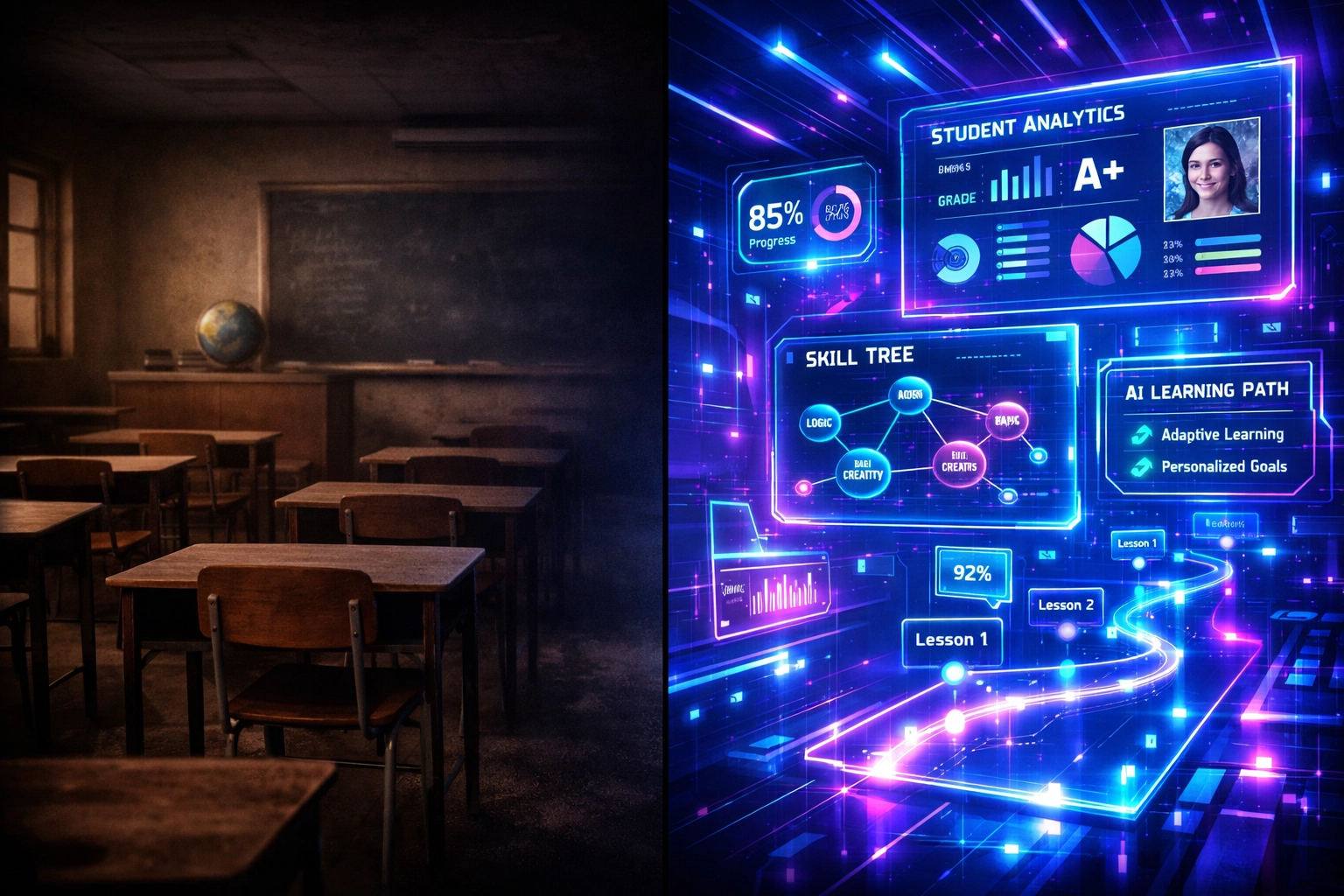
This is where NLP solutions shine. Natural language processing doesn't just evaluate written responses: it analyzes communication style, clarity of thought, and professional articulation. It can assess whether a student can explain complex technical concepts to non-technical stakeholders (a critical job skill) long before they step into an interview.
LoudMindAI's approach to AI assessments prioritizes this kind of practical, job-relevant evaluation over academic abstraction.
What This Means for Your Institution (And Why Delay Is Deadly)
If you're still running traditional campus-to-career programming without AI integration, you're not just behind: you're actively disadvantaging your students.
Consider what happens when competing institutions adopt AI assessment:
Their students receive 18% better learning outcomes and arrive at job interviews with documented, data-backed readiness scores
Their career services teams operate 40% more efficiently, allowing deeper employer relationships and better placement rates
Their programs identify and support struggling students before they fail, not after: dramatically improving retention and completion rates
Their graduates enter the workforce with proven capabilities, not just degree credentials
Meanwhile, your students are still polishing resumes and hoping for the best.
The gap isn't subtle. It's measurable, significant, and growing daily.
The Path Forward: Integration, Not Replacement
Here's the good news: you don't need to burn down your entire career services infrastructure.
AI assessment doesn't replace your career advisors: it amplifies them. It doesn't eliminate traditional programming: it makes it dramatically more effective. The institutions winning this transition are those that integrate AI automation strategically:
Start with high-impact, low-complexity implementations:
Deploy AI-powered skills assessments that provide baseline readiness scoring for every student entering your career pipeline
Implement real-time analytics dashboards that flag students needing intervention before they slip through the cracks
Automate administrative workflow coordination so career advisors spend time advising, not scheduling
Integrate NLP-based communication assessments into existing interview prep programs
The key is moving from periodic, reactive assessment to continuous, proactive readiness building. AI automation solutions that focus on workflow efficiency and measurable outcomes deliver ROI faster than complex, enterprise-wide overhauls.
The Bottom Line: Evolve or Watch Your Graduates Struggle
Your campus-to-career program isn't failing because your team lacks dedication or expertise. It's failing because the tools and methodologies you're using were designed for a job market that no longer exists.
Employers don't want graduates who can pass tests: they want professionals who can solve problems. They don't care about your assessment rubrics: they care about demonstrated capability. And increasingly, they're using their own AI-powered evaluation tools to separate truly job-ready candidates from credential-holders who can't perform.
If your institution isn't providing AI-assessed, data-backed readiness verification, you're sending students into that gauntlet unprepared and unprotected.
The AI assessment revolution isn't coming: it's here. The only question is whether you'll lead this transformation or be left behind explaining to trustees why your placement rates keep declining while competitor institutions surge ahead.
Your students deserve better than obsolete career prep. They deserve the precision, personalization, and proven effectiveness that custom AI solutions make possible.
The revolution is happening. The only choice you actually have is whether you're part of it.
Ready to transform your campus-to-career program with AI-powered assessments that actually work? Discover how LoudMindAI builds readiness systems that bridge the gap between academic achievement and job market success( with measurable results in weeks, not years.)
Comments