The Campus-to-Career Gap Isn't Real, Your Hiring Process Is Just Broken: 5 AI Assessment Secrets That Fix It Fast
- Monish Kumar

- Feb 14
- 4 min read
Here's the uncomfortable truth HR doesn't want you to hear: There is no campus-to-career gap. There's a broken hiring process that filters candidates using ancient methods, then blames "unprepared graduates" when things go sideways.
You're screening resumes like it's 1995. You're conducting interviews that test charm over competence. And you're wondering why 40% of your graduate hires quit within 90 days.
The problem isn't the talent pool, it's your outdated assessment toolkit.
Let's fix it.
Why Your "Campus-to-Career Gap" Is Actually a Hiring Process Problem
Every recruiter loves to complain about fresh graduates lacking "real-world skills." But here's what they won't admit: their hiring process has zero capacity to measure those skills in the first place.
You rely on:
Resumes , polished by ChatGPT and reviewed by career counselors
Interviews , 30-minute charm contests that favor extroverts
References , carefully curated endorsements from professors who barely remember the student
None of these tell you if the candidate can actually do the job.
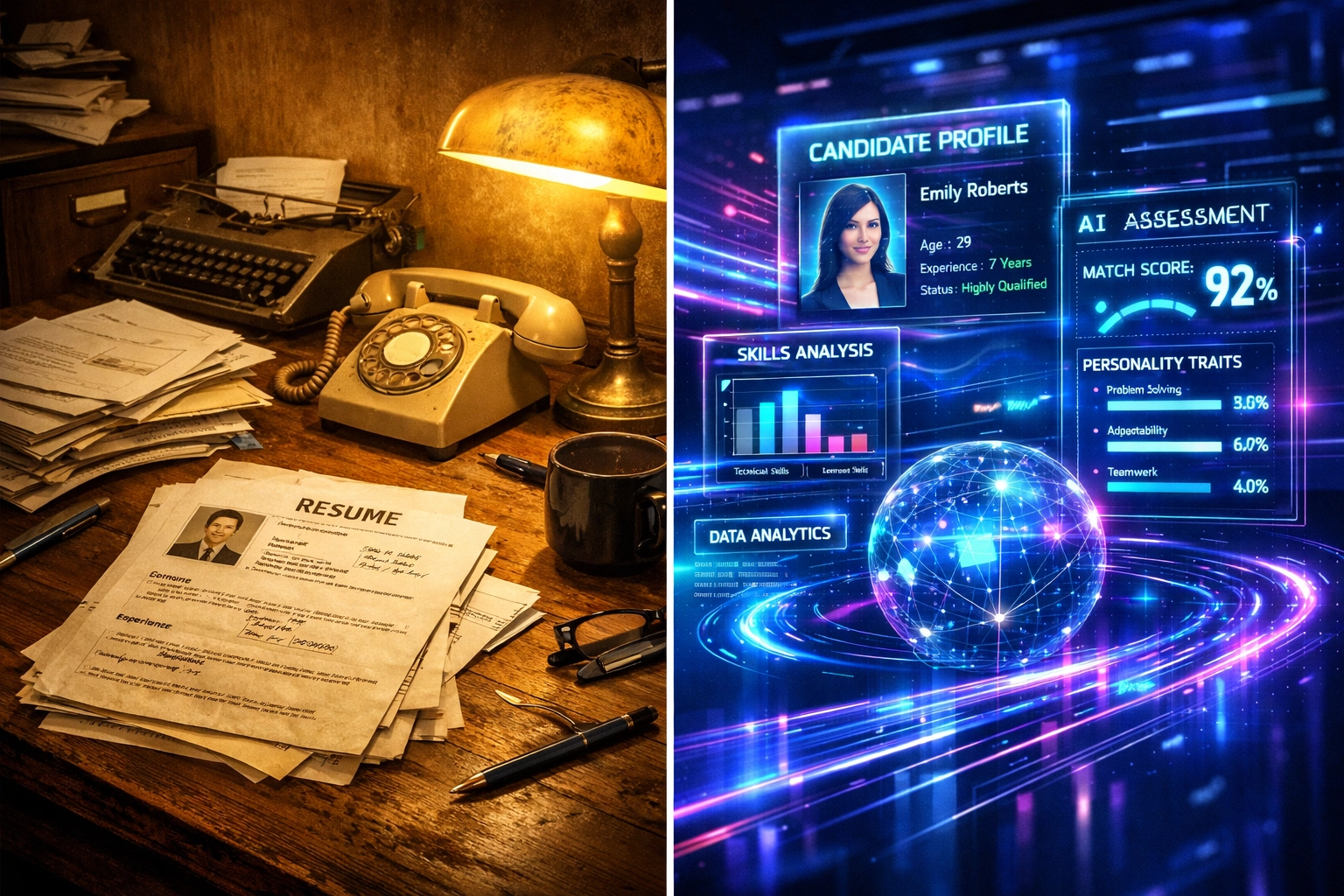
Meanwhile, your competitors are deploying AI-powered assessment platforms that simulate real workflows, measure decision-making under pressure, and generate objective readiness scores, before candidates ever step into an office.
That's not a campus-to-career gap. That's a measurement gap. And AI just closed it.
The 5 AI Assessment Secrets That Transform Graduate Hiring
Forget the platitudes about "upskilling" and "mentorship programs." If you want to hire better graduates faster, you need intelligent automation solutions that do the heavy lifting for you.
Here are the five secrets top companies are already using.
1. Real-World Simulations Beat Theoretical Questions Every Time
Stop asking graduates to "describe a time when..." and start showing you what they can actually do.
Modern AI assessment platforms create hyper-realistic job simulations, miniature versions of the actual role. Marketing candidates run campaign briefs. Finance grads analyze financial models. Engineers debug real code snippets.
The difference? You're not testing memorized answers. You're observing real-time problem-solving.
LoudMindAI's Industry Ready AI platform takes this further with AI agents that adapt difficulty based on performance, like a video game that scales with your skill level. The result? You see exactly how far each candidate can stretch before they hit their limits.
2. Natural Language Processing (NLP) Reveals Communication Skills Automatically
Here's a secret: You don't need to conduct five rounds of interviews to assess communication skills. NLP solutions analyze written and spoken responses to measure clarity, structure, and professionalism instantly.
AI can evaluate:
Conciseness , Do they ramble or get to the point?
Technical vocabulary , Do they understand industry jargon appropriately?
Tone and confidence , Are they assertive without being arrogant?

This isn't replacing human judgment, it's augmenting it. Your recruiters spend time with top candidates instead of wading through hundreds of mediocre applications.
Want proof? Companies using NLP-powered assessments reduce screening time by 70% while improving quality-of-hire scores by over 30%.
3. The AI Readiness Score: The One Metric That Actually Predicts Performance
Resumes list skills. Interviews test likability. But neither predicts day-one performance.
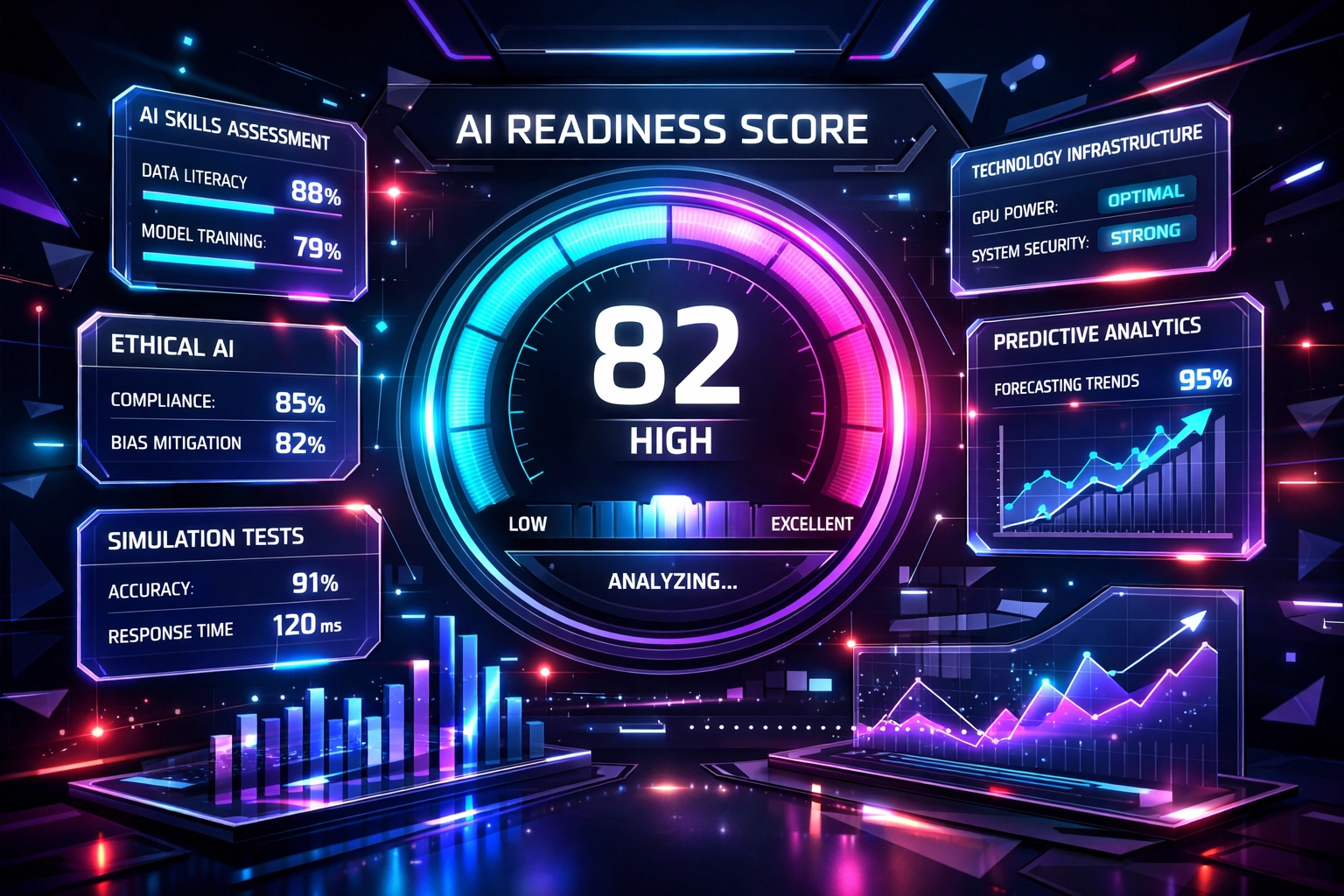
Enter the AI Readiness Score, a data-driven metric that combines simulation performance, skill assessments, and behavioral analysis into a single number. Think of it as a credit score for job readiness.
Here's why it works:
Objective , No unconscious bias sneaking into the equation
Predictive , Correlates directly with first-year performance reviews
Transparent , Candidates know exactly where they stand and what to improve
Top employers are already demanding readiness scores from candidates. We wrote about why this matters for modern hiring teams who refuse to gamble on gut feelings.
If you're still hiring based on "years of experience" and vague interview impressions, you're already behind.
4. Automated Workflow Assessments Replace Outdated Case Studies
Case studies are slow, expensive, and easy to cheat on (yes, candidates Google the answers during your timed tests).
AI-powered workflow assessments are different. They drop candidates into authentic business scenarios with realistic constraints: tight deadlines, incomplete information, conflicting stakeholder demands.
The AI tracks:
Decision-making speed : Do they freeze under pressure or act decisively?
Resource allocation : Do they prioritize high-impact tasks?
Adaptability : How do they handle curveballs mid-task?
This is where intelligent automation solutions shine. Instead of manually reviewing case studies for days, AI evaluates hundreds of candidates simultaneously and surfaces the top 10% for human review.
Fast. Scalable. Objective.
5. Continuous Assessment Beats One-Time Tests
Here's the dirtiest secret in hiring: One-time assessments are terrible predictors because people have good days and bad days.
Smart companies use continuous micro-assessments over weeks, not hours. Candidates complete short challenges regularly: analyzing a market trend on Monday, debugging code on Wednesday, pitching a strategy on Friday.
The AI aggregates performance across scenarios to build a complete competency profile. You're not judging someone based on one nervous interview or one lucky test score. You're seeing the full picture.
This approach also gives candidates multiple chances to demonstrate growth: a far better indicator of long-term potential than a single snapshot.
What Happens When You Actually Fix Your Hiring Process?
Let's get specific. Companies that deploy AI assessments see:
✅ 50% reduction in time-to-hire : No more endless interview rounds ✅ 90-day retention improvement of 40%+ : You're hiring people who actually fit the role ✅ Elimination of unconscious bias : Decisions based on data, not "culture fit" code words ✅ Candidate experience boost : Graduates appreciate transparent, fair evaluation
But the real win? You stop blaming graduates for your broken process.

The so-called campus-to-career gap disappears when you give candidates a fair shot to prove themselves: and give your hiring team the tools to measure what actually matters.
Stop Guessing. Start Measuring.
The campus-to-career gap narrative is a convenient excuse for companies unwilling to modernize their hiring infrastructure.
But here's the reality: The best graduates are already out there. They're just being filtered out by resume parsers that can't read context, interviews that reward performance over competence, and hiring managers who confuse "experience" with "ability to learn fast."
Custom AI solutions change that equation. They level the playing field. They surface hidden talent. And they make your hiring process faster, fairer, and more predictive than anything you've used before.
If you're serious about closing the gap, stop tweaking your interview questions and start rethinking your entire assessment strategy.
Ready to see what AI assessments can do for your hiring pipeline? Explore Industry Ready AI or book a consultation with LoudMindAI to build a custom assessment solution that fits your exact needs.
The talent is there. Your hiring process just needs to catch up.
Comments