Your Degree Is Worthless Without This: The AI Assessment Secrets Top Companies Use to Filter 90% of Graduates
- Monish Kumar

- Feb 9
- 6 min read
Let's get one thing straight: your degree got you in the door. But AI is slamming it shut before you even get to say hello.
That 3.8 GPA? Those dean's list honors? That expensive piece of paper from a top-tier university? Companies are feeding them into AI assessment systems that filter you out in 90 seconds flat. And here's the kicker: they're not even looking at your credentials the way you think they are.
Welcome to the new hiring reality where intelligent automation solutions have completely rewritten the rules of campus-to-career transition. And if you don't understand what's happening behind the curtain, you're already losing.
The AI Gatekeeper You Never See Coming
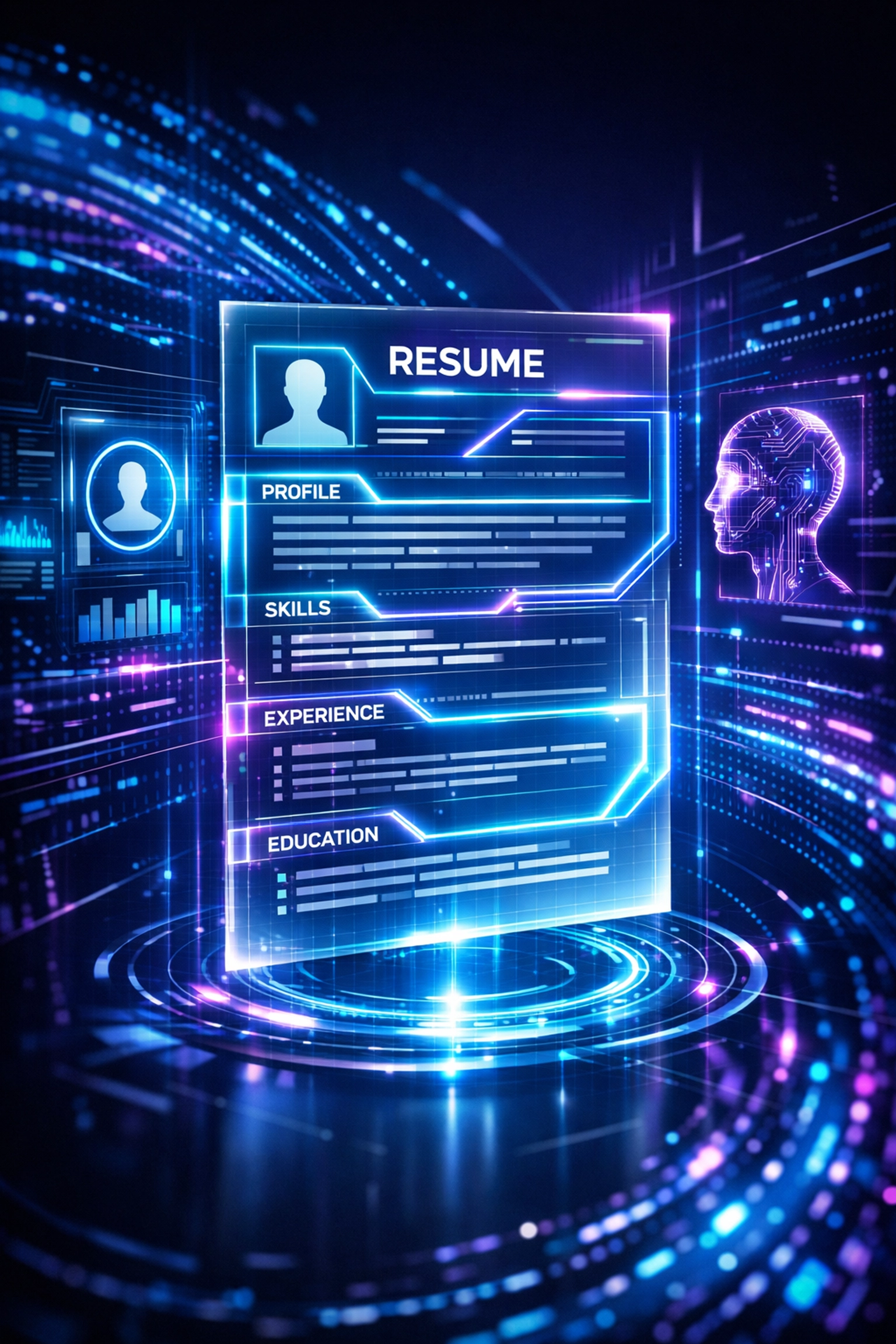
Before any human recruiter reads your carefully crafted resume, you're being evaluated by AI systems that would make your professors look like amateurs. These aren't simple keyword scanners anymore: they're sophisticated nlp solutions that analyze everything from your word choice to your facial microexpressions during video interviews.
Here's what's actually happening when you hit "submit" on that application:
Semantic Resume Parsing : AI extracts and contextualizes every detail from your resume, matching skills against job requirements with frightening precision. It's not looking for buzzwords; it's understanding meaning and relevance at scale.
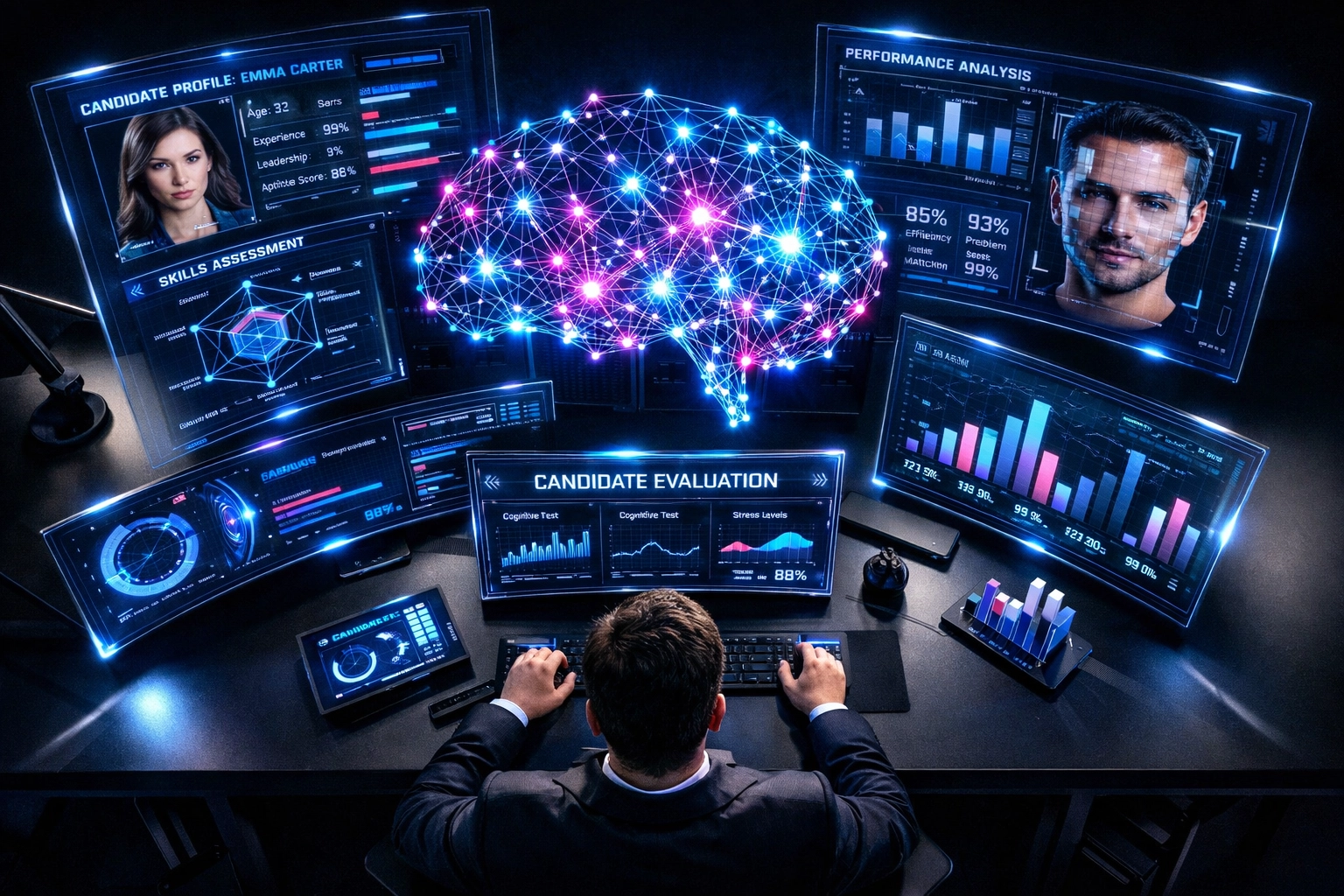
Behavioral Analysis : Platforms like HireVue are recording your video responses and comparing your demeanor, enthusiasm, facial expressions, and word choice against their existing high-performing employees. You're literally being matched against a behavioral blueprint you never knew existed.
Real-Time Skill Validation : Tools like CodeSignal drop you into realistic development environments while AI watches how you think, how you problem-solve, and how you handle pressure. Your ability to actually perform trumps your ability to list skills on paper.
The brutal truth? Most graduates fail these assessments not because they're unqualified, but because they're optimized for the wrong game. You spent four years mastering academic metrics while the job market evolved into something entirely different.
What Your Degree Doesn't Prove (But AI Assessments Do)
Companies don't care that you can ace exams anymore. They need proof you can handle the chaos of real work environments. Here's the gap AI assessments are designed to expose:
Applied Skills Over Theoretical Knowledge : Can you actually build the thing, solve the problem, or handle the client conversation? Or did you just memorize enough to pass the test and forget it by graduation?
Workplace Readiness : Do you communicate clearly under pressure? Can you collaborate remotely? Will you adapt when requirements change mid-project? Your transcript says nothing about this.
Cultural Fit and Soft Skills : AI analyzes communication patterns, problem-solving approaches, and interpersonal dynamics that predict whether you'll thrive in their specific environment. Two candidates with identical degrees get wildly different readiness scores based on these factors.
Learning Agility : How quickly do you adapt to new tools, frameworks, and methodologies? The half-life of technical skills is shrinking fast, and companies need people who can keep up.
This isn't about companies being cruel. It's about ai automation enabling them to find signal in the noise of thousands of applications. The technology exists to measure what actually matters: so they're using it.
The Assessment Arsenal That's Judging You Right Now
Let's demystify the tools that are making hiring decisions before humans ever see your name. Understanding these systems is your first step toward beating them:
Asynchronous Video Platforms : You record answers to preset questions. AI evaluates linguistic patterns, confidence levels, body language, and response quality. Companies get insights on communication skills and cultural alignment at scale.
Competency-Based Simulations : Realistic job previews that drop you into actual work scenarios. How do you prioritize competing demands? How do you handle an angry stakeholder? AI tracks your decision-making process and compares it to successful employees.
AI-Generated Skill Tests : Systems like Canditech use custom ai solutions to generate assessments directly from job descriptions, then auto-score your performance. The test is tailored to the exact role you're applying for: no generic multiple choice here.

Continuous Evaluation Environments : Some companies use AI agents that monitor your performance across multiple tasks over days or weeks. They're building a comprehensive readiness profile that goes far beyond a single interview or test.
The companies deploying these tools aren't trying to trick you. They're trying to predict job performance with data instead of gut feelings. And the data is clear: assessment performance correlates with on-the-job success far better than GPA ever did.
Your Readiness Score Matters More Than Your Resume
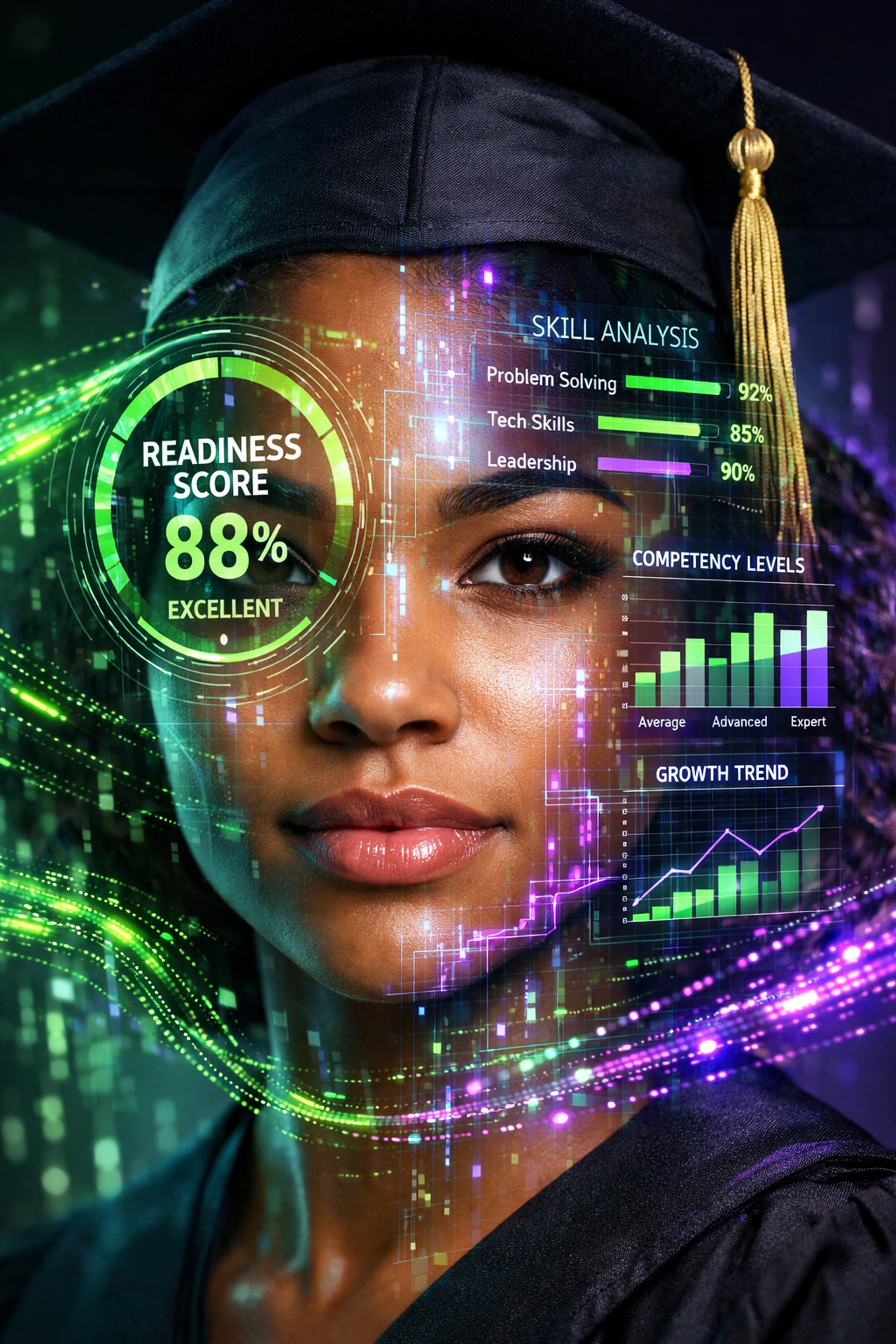
Here's what top recruiters won't tell you directly: they've moved beyond credentials to something called a "Readiness Score": a composite metric that AI generates based on your performance across multiple assessment dimensions.
This score factors in:
Technical proficiency in job-relevant skills
Communication clarity and professional presentation
Problem-solving approach and critical thinking
Adaptability indicators and learning speed
Cultural alignment with company values
A candidate with a 3.0 GPA and a high Readiness Score beats a 4.0 GPA with average assessment performance every single time. The degree proves you can learn. The Readiness Score proves you're ready to contribute from day one.
And here's the part that should wake you up: this score is being calculated whether you know it or not. Every application, every assessment, every video interview is feeding data into systems that tag you as "high potential" or "filter out."
The Campus-to-Career Gap Nobody Warned You About
Universities optimized you for academic success. The job market demands industry readiness. That's not a minor difference: it's a canyon.
Your professors rewarded deep knowledge in narrow subjects. Employers need broad adaptability across tools and contexts. You learned to work alone on assignments with clear rubrics. Work requires messy collaboration on ambiguous problems with shifting requirements.
The campus-to-career gap isn't about what you know. It's about how quickly you can apply, adapt, and communicate that knowledge in high-pressure, real-world situations. And AI assessments are precision instruments for measuring exactly that gap.
Companies aren't being harsh: they're being efficient. When you can evaluate 5,000 applicants through AI-powered assessments and identify the 500 most likely to succeed before a single phone screen, why wouldn't you?
How to Actually Prepare for AI-Powered Hiring
Stop optimizing for recruiters who might never see your application. Start optimizing for the AI systems that definitely will. Here's how:
Practice in Assessment Environments : Use platforms that simulate real assessment conditions. Get comfortable with asynchronous video, timed skill tests, and work simulations. Familiarity reduces anxiety and improves performance.
Build a Portfolio of Applied Work : Side projects, freelance gigs, open-source contributions: anything that proves you can deliver results outside controlled academic settings. AI assessments often include portfolio reviews that validate your practical capabilities.
Develop Metacognitive Awareness : Can you explain your thinking process clearly? Do you understand how you approach problems? AI evaluates not just your answers but your reasoning. Practice articulating your decision-making framework.
Master Async Communication : Record yourself explaining complex topics. Review the footage critically. Work on clarity, confidence, and conciseness. These skills show up in every AI assessment format.
Study Company Culture Signals : Before any assessment, research the company's values, communication style, and stated priorities. AI systems often evaluate cultural fit based on how well your responses align with these elements.
The graduates who thrive in this new landscape aren't necessarily the smartest: they're the ones who understand the game has changed and adapted accordingly.
The Automation Revolution Isn't Waiting for You
While we're talking about student readiness, companies are simultaneously deploying intelligent automation solutions across every function. The roles you're applying for today will be partially automated by the time you're promoted. Entry-level tasks you expected to master are being handled by AI agents right now.
This isn't doom and gloom: it's reality check time. The skills that keep you relevant aren't technical depth in a single area. They're the meta-skills AI can't easily replicate: strategic thinking, creative problem-solving, complex communication, and cross-functional collaboration.
AI assessments are screening for these skills because companies know technical capabilities can be taught quickly. But adaptability, learning agility, and professional maturity? Those take time to develop: and they're what separate graduates who advance from those who plateau.
The Truth About Your Career Trajectory
Your degree bought you a ticket to the game. Your Readiness Score determines whether you actually get to play. And right now, most graduates are sitting on the bench wondering why nobody's calling their name: never realizing they failed an AI assessment three weeks ago.
The companies leading their industries aren't waiting for perfect candidates with flawless credentials. They're using AI-powered hiring tools to find people with high potential and strong readiness indicators, then developing them rapidly. If you're stuck in generic resume loops, you're playing the wrong game entirely.
The bridge from campus to career has always existed. But now it's equipped with AI sensors, performance metrics, and real-time filtering systems. You either learn to navigate it or you keep wondering why you're not getting callbacks despite your impressive transcript.
Your Next Move
Stop treating job applications like lottery tickets. Start treating them like performance evaluations: because that's exactly what they've become. The AI systems evaluating you right now are measuring readiness, not potential. They're assessing performance, not credentials.
Your degree opened doors. But what walks through them? That's determined by how well you understand and prepare for the AI assessment reality that's already here. The graduates thriving in 2026 aren't the ones with the best GPAs: they're the ones who figured out what's actually being measured and optimized for it.
The question isn't whether AI will continue transforming hiring. It's whether you'll adapt fast enough to benefit instead of being filtered out. Because while you're debating whether this is fair, someone else is already preparing: and they're going to take your spot.
Ready to bridge your own campus-to-career gap? The AI assessments aren't going anywhere. But your approach to them can change today.
Comments