The Readiness Score Matters: Why a Degree Without an AI Assessment is Just Expensive Paper
- Monish Kumar

- Mar 5
- 5 min read
Let’s be brutally honest: that $100,000 degree hanging on your wall? It’s a receipt, not a guarantee.
In the current market, a university diploma tells an employer one thing: you were able to follow instructions and pass tests in a controlled environment for four years. It doesn’t say a damn thing about whether you can handle a high-pressure sprint, pivot when a project fails, or integrate with a modern tech stack.
The "Campus-to-Career" gap isn’t just a minor inconvenience: it’s a chasm. And for businesses, this gap is a financial black hole. Every time a company hires a graduate based solely on their degree and a polished resume, they are gambling. They are betting that the "paper" translates to performance.
Spoilers: It usually doesn't.
At LoudMindAI, we’re seeing the shift firsthand. The era of the "Generalist Graduate" is over. We are entering the era of the Readiness Score. If you aren't assessing students with AI before they hit the payroll, you aren't hiring talent: you're buying expensive paper.
The Brutal Truth About the Degree-Only Economy
For decades, the degree was the ultimate filter. If you had the paper, you were "qualified." But in 2026, the signal-to-noise ratio has shifted. With the explosion of generative AI, students are graduating with high GPAs but zero "muscle memory" for actual industry workflows.
Traditional assessments: multiple-choice questions, static essays, and standard interviews: are dead. They are too easy to game. A student can use a basic LLM to draft a perfect response, but that doesn't mean they understand the logic behind the solution.
This is why your graduate hires quit in 90 days. They realize the reality of the job is nothing like the theory of the classroom, and the employer realizes the "honor student" they hired can’t actually execute.

What is a Readiness Score?
A Readiness Score is a data-driven metric generated by intelligent automation solutions that evaluates a candidate's actual ability to perform in a specific role. It’s not about what they know; it’s about how they apply what they know.
Unlike a GPA, which is a lagging indicator of past academic performance, a Readiness Score is a leading indicator of future professional success. It measures:
Technical Logic: Can they solve problems using custom AI solutions and modern frameworks?
Cognitive Adaptability: How do they respond when the parameters of a task change mid-way?
Communication Efficacy: Using NLP solutions, we can analyze their ability to explain complex concepts to non-technical stakeholders.
Workflow Integration: Can they use AI automation tools to streamline their own productivity?
Without this score, you are flying blind. You are essentially sending students into the void and hoping they land on their feet.
Why Resumes are the VHS Tapes of Recruitment
If you are still asking for a PDF resume, you are living in the past. Resumes are static, biased, and increasingly fabricated. They highlight "what" a person did, but never "how well" they did it.
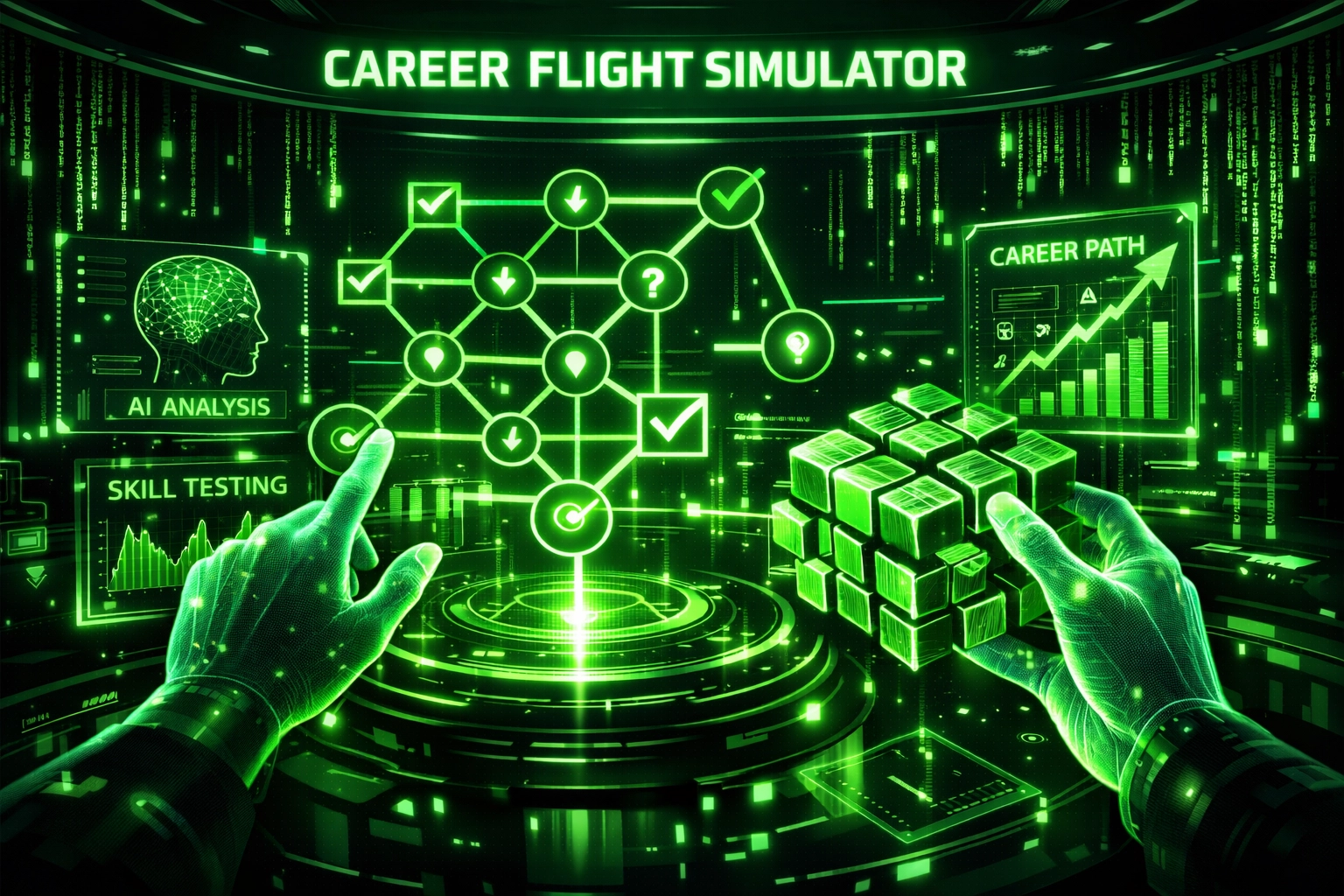
The industry is moving toward AI-driven assessments that act as a "flight simulator" for the job. Instead of reading about a candidate’s "strong communication skills," an AI agent can engage them in a simulated high-stakes client negotiation. Instead of looking at a "Proficient in Python" bullet point, a custom AI solution can give them a broken codebase and watch them debug it in real-time.
This is how you bridge the campus-to-career gap in 30 days. You stop looking at the paper and start looking at the performance data.
The Financial Cost of Ignoring the Readiness Score
Let’s talk ROI. The average cost of a bad hire is estimated at 1.5x to 2x the employee’s annual salary. For a fresh graduate, between recruitment, onboarding, and lost productivity, a single hiring mistake can cost upwards of $50,000.
For large enterprises, this isn't just a line item; it's a catastrophe. If you're hiring 100 grads a year and 20% of them fail, you've just flushed a million dollars down the drain.
The campus-to-career gap will eat your hiring budget if you don't fix it. By implementing a Readiness Score through custom AI solutions, you cut onboarding time by half because you already know exactly where the candidate’s strengths and weaknesses lie. You aren't teaching them the basics on your dime; you're refining a pre-validated asset.
How Custom AI Solutions Build the Score
At LoudMindAI, we don't believe in one-size-fits-all. A Readiness Score for a software engineer looks vastly different from a Readiness Score for a marketing manager.
We utilize NLP solutions to analyze the nuance in a candidate's problem-solving process. Our intelligent automation solutions create dynamic environments where students must interact with AI agents to complete multi-step workflows.
This isn't just about "getting the right answer." It’s about the path taken to get there.
Did they use the AI agent effectively?
Did they double-check the data grounding?
Did they exhibit the critical thinking required to catch a hallucination?
These are the skills that matter in 2026. If a degree doesn’t measure this, the degree is obsolete.

The University Disconnect: A Call to Action
Universities are currently failing their students. They are teaching theory in an AI-driven world. They focus on long-term memorization when the world demands rapid adaptation.
If you are a student, you need to realize that your degree is only the baseline. You need a Readiness Score to prove you are actually "industry ready." You need to stop sending generic resumes and start looking for ways to validate your skills through AI.
If you are a business leader, stop being blinded by the prestige of a university name. A degree from an Ivy League school without an AI-validated Readiness Score is a high-risk investment. Your next hire should be assessed before day one. Period.
Implementing the Readiness Score in Your Workflow
Transitioning to a Readiness-based hiring model doesn't have to be a nightmare. It’s about AI automation.
Audit Your Requirements: What does "Day One Success" actually look like?
Deploy Custom AI Assessments: Move away from standardized testing and toward role-specific simulations.
Analyze the Data: Use intelligent automation solutions to rank candidates based on their Readiness Score, not their school ranking.
Shorten the Feedback Loop: Give students their scores. Help them see the gap. The best ones will close it before they even interview.
This approach is bridging the campus-to-career gap fast. It turns recruitment from a guessing game into a science.
Stop Buying Paper, Start Buying Performance
The world is moving too fast for "expensive paper" to be the standard. We are in the middle of a massive displacement of traditional workflows by autonomous AI agents. If your new hires don't know how to work alongside these agents, they are a liability, not an asset.
The Readiness Score is the only metric that matters. It’s the bridge between the theoretical world of the campus and the brutal reality of the career.
Don't let your hiring budget be a victim of an outdated system. It’s time to demand more from graduates, more from universities, and more from your own recruitment process.
LoudMindAI is here to build those bridges. Whether it’s through NLP solutions that vet communication or custom AI solutions that test technical grit, we ensure that when you hire, you aren't just buying a degree: you're buying a proven capability.
The gap is real. The cost is high. But the solution is here. Is your team ready to stop looking at resumes and start looking at the score?
Because at the end of the day, your students are industry-ready on paper, but the truth is much more brutal. Fix the assessment, fix the hire, and fix the business.
That’s the LoudMindAI way.
Comments